
[RH Review] Ms. 45
After more than 30 years since its original release, Abel Ferrera's Ms. 45 has been resurrected as the next in line of Drafthouse Films' releases. Originally panned by critics, the film has garnered a cult following over the past three decades. With a new remastered, unrated cut, the film is returning to limited theaters and home video for a new generation of film audiences. However, will its cult status be justified in this age of new cinematic advancements, or will it be seen as an outdated blast from the past and nothing else?
[youtube id="dvlNU06HL74" mode="normal" align="center"]
Ms. 45
Director: Abel Ferrera
Rating: N/A
Release Date: December 13, 2013
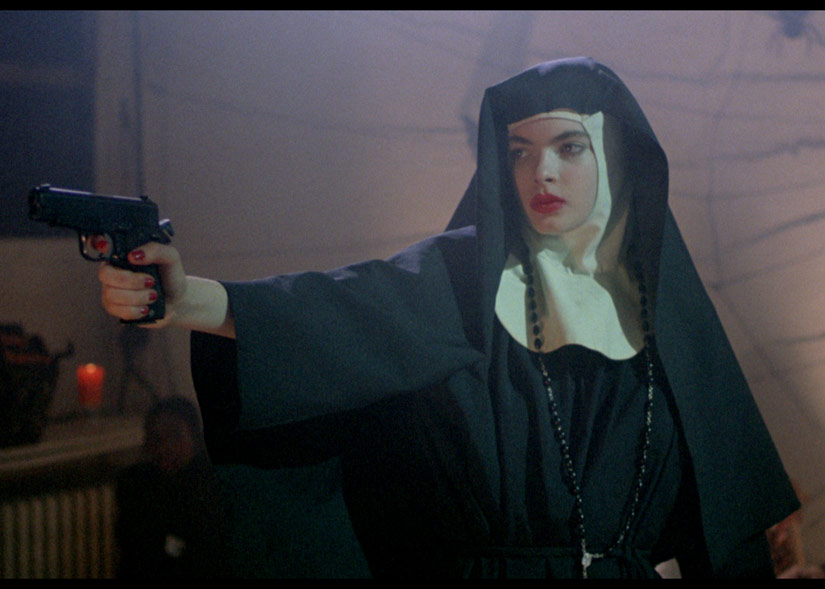
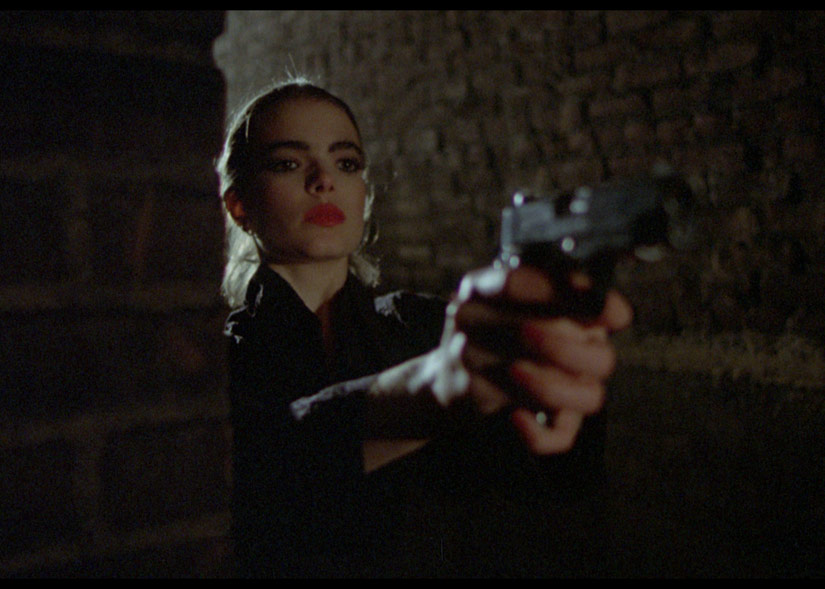
Thana (Zoe Tamerlis Lund) is a mute seamstress living and working in New York City. On her way home one day, she's viciously attacked and raped in an alley. During the encounter, a burglar breaks into her apartment and assaults her once she returns. However, during the incident, Thana is able to get the upper-hand, accidentally killing the assailant in the process. After dismembering his body, she takes his gun and begins venturing into the city, targeting horny men who may or may not pose as a threat to her. With her psyche diminishing, she begins to purposely bait men as a means of justifiably murdering them in a twisted sense of self-fulfillment.
By making Thana mute, other characters (obviously) have to speak for Thana, outside of the handful of times she directly communicates with written messages. Outside of the noted references/homages to the Swedish film Thriller - A Cruel Picture, what purpose does a mute protagonist fit? Outside of unnecessary exposition and having to audibly be presented to Thana's rationale, is there any real benefit to having Thana mute? In saying that, is there something wrong in keeping the film's protagonist silent? I don't have an answer for this right now, yet it was something I was wondering throughout the film's duration.

Now comes the actual crux of the review: the subject matter. I'll be perfectly blunt: An exploitation film like this would never fly under current MPAA guidelines. With censorship looming over the art of cinema, growing awareness of political correctness, and the internet's newfound embracement of feminism, does Ms. 45 get a "pass" because of its cult status and self-awareness of its genre (late '70s-esque exploitation)? Any modern film that featured a female protagonist (or any person, for that matter) getting raped and sexually assaulted without having a voice, figuratively and literally in this instance, would face so many objections. Is it fair to view the film's subject matter through the current, hyper-political lens we treat contemporary films? Probably not.
Then again, isn't that the whole basis for exploitation films? To take social norms, social taboos, and throw them out the window? Thana fits this super feminist role where she takes justice, no matter how misguided, into her own hands. But, at the same time, it's at the cost of her sanity and sexuality. As her mind begins to further twist and devolve, she begins to dress more provocatively to lure her prey in before killing them. I feel torn and conflicted over the film's content.
From a strictly technical standpoint, the acting is subpar and exaggerated, which is more of a reflection of the genre/times. The HD remastering helped the video fidelity and audio quality, but Ms. 45 was never a technical achievement, anyways. Again, this is due in part to its exploitation nature.
In 30 years, I feel that films and film audiences have grown by leaps and bounds. Films look more grandiose, subject matter is more introspective and entertaining... I can understand why the film has its cult following, but I just can't consider myself to be part of it. With its re-release for new audiences, I'm curious to see if audiences will accept it or malign it much in the same way it was so many years ago.
[RH Review] The Crash Reel
With the increasing dangers and illumination of brain injuries in sports, many steps and restrictions are put in place to ensure the safety of athletes. Sometimes, the decisions made are perceived as coddling and taking away from the sport itself, like the NFL, which has done everything in their power to cut down on concussions and head trauma despite fans' mixed responses to the new rules.
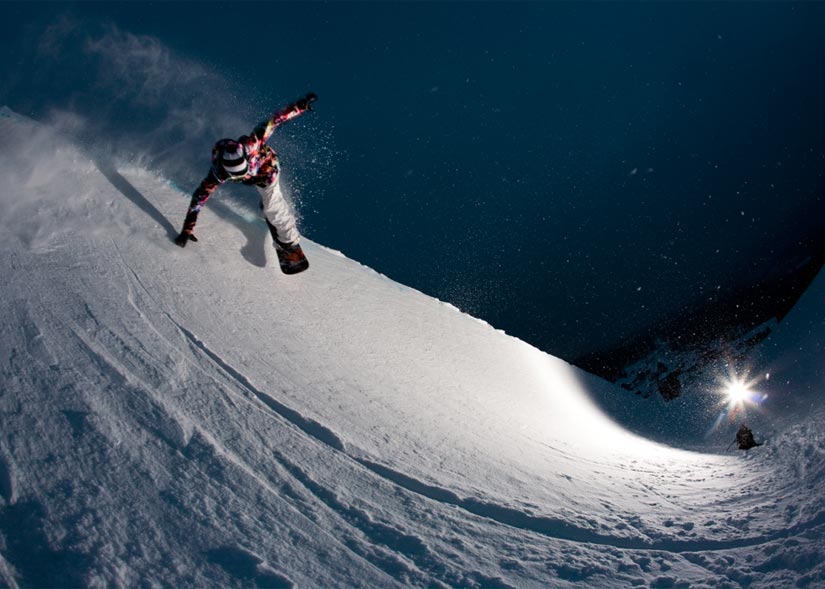
Action sports, from everything from snowboarding to BMX and everything in between, has grown exponentially, both in terms of popularity and exposure to the level of tricks. In saying that, the risk is higher than ever across the board. Unfortunately, many action sports athletes sacrifice their bodies for the sport they love. The Crash Reel is an Academy Award contender about one such athlete and his journey leading up to and following a traumatic brain injury.
[youtube id="Sj0vY2Nymqw" mode="normal" align="center"]
The Crash Reel
Director: Lucy Walker
Rating: N/A
Release Date: December 13, 2013
Kevin Pearce was, at one point in time, one of the best and most popular professional snowboarders alongside Shaun White. However, while training for the Vancouver 2010 Winter Olympics, Pearce suffered a tragic accident that threatened to end his professional snowboarding career. Told through archival footage from Pearce's beginnings in the sport to his rehabilitation following the injury, The Crash Reel examines the real life struggles one faces after a life-changing accident.
From slowly having his dreams to return to the sport he loves taken away from him to transitioning into the next stage in his life, The Crash Reel presents Pearce as an everyman to represent life after near-death. Intertwined with Pearce's stories are stories about other action sports athletes who have faced and, unfortunately, succumbed to traumatic brain injuries, such as famed Women's freestyle skier and pioneer, Sarah Burke.
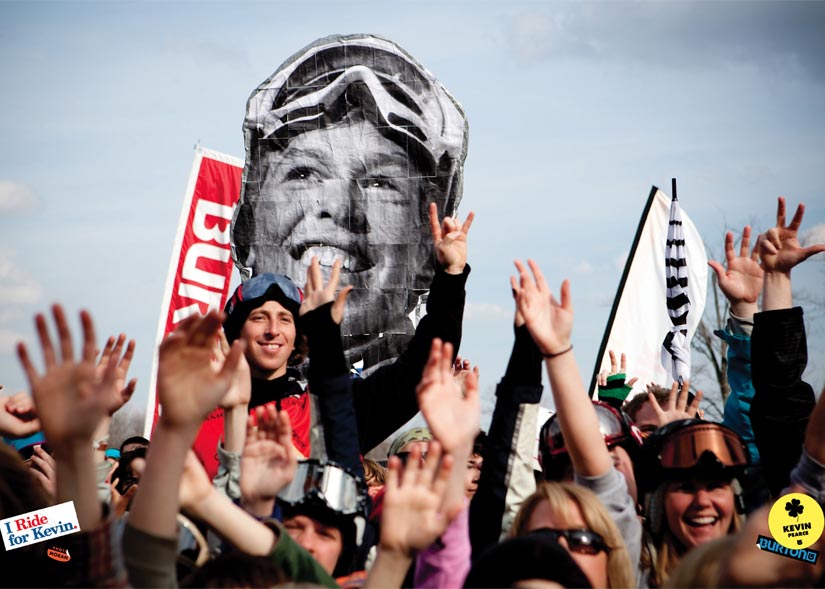
As previously mentioned, the documentary features archival footage used to follow Pearce's journey. Director Lucy Walker created a narrative that highlights Pearce's rise as a young, aspiring snowboarder, establishing an early friendship-turned-rivalry with fellow snowboarder Shaun White, the meteoric rise in the sport as White's foil, a projected medal winner at the 2010 Winter Olympics, the trials and tribulations faced following the accident, and the necessary steps to create a new life from there. In past documentary reviews, I've noted how a successful documentary can be viewed and weighted by the subject matter and how that topic is analyzed and delivered. A problem I face with them is not being attracted to them if the subject matter doesn't appeal to me. Of course, the best docs are the ones that gave a universal appeal despite its subject matter; in saying that, it's a bit hypocritical since the subject matter itself is what will garner appeal.
The Crash Reel may not have the initial attraction to those who aren't familiar with snowboarding or Kevin Pearce. However, once drawn in, the viewer understands that the documentary may be framed around Pearce's individual story, but it's one that can represent and help humanize and generalize the struggles that both an individual and their family faces when attempting to piece their lives back together. By focusing on somebody who was so young and in a somewhat prominent sport, it has a general appeal.

The Crash Reel illuminates the inherent dangers that every snowboarder faces. By using Pearce as the documentary's focal point, Walker and her team analyze some of the unseen effects a traumatic brain injury have on everybody involved. Pearce's story isn't necessarily used as a cautionary tale for others, but instead as a story for perseverance. As a potential Oscar contender, it may be one of the best documentaries I've seen this year.
Score:  8 out of 10
[RH Review] Go for Sisters
Life leads us down unexpected paths sometimes. The friends of our past oftentimes become the strangers of our future. Yet, when it comes time to test that friendship, we're surprised at how far people will go to help a friend in need... even if decades of silence have past. John Sayles' Go for Sisters is a story about two close childhood friends who simply drifted away during high school. While their lives led them to complete opposite ends of the social spectrum, one incident brings the two back together.
[youtube id="3HX6t2WwNHs" mode="normal" align="center"]
Go for Sisters
Director: John Sayles
Rating: N/A
Release Date: November 15, 2013
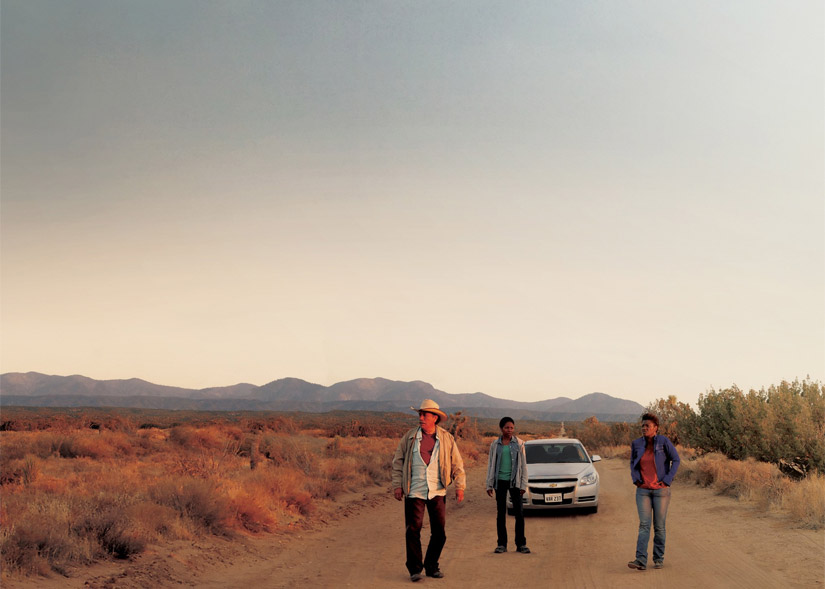
Bernice (LisaGay Hamilton) is a parole officer assigned to ex-convict, Fontayne (Yolanda Ross). The film opens with their first encounter at Bernice's office, but it's apparent that there's history between them: they were former high school best friends. When Bernice discovers that her estranged son might have been connected to a murder, she turns to Fontayne to help introduce her to the less-than-legal side of the law. Their quest for answers leads them to an illegal human trafficking ring in Tijuana. They turn to a disgraced former cop, Freddy (Edward James Olmos), to help them navigate across the border to find Bernice's missing son. What entails is a mystery, neo-noir character drama that analyzes the friendship between Bernice and Fontayne and how far a friend would go... for a sister.
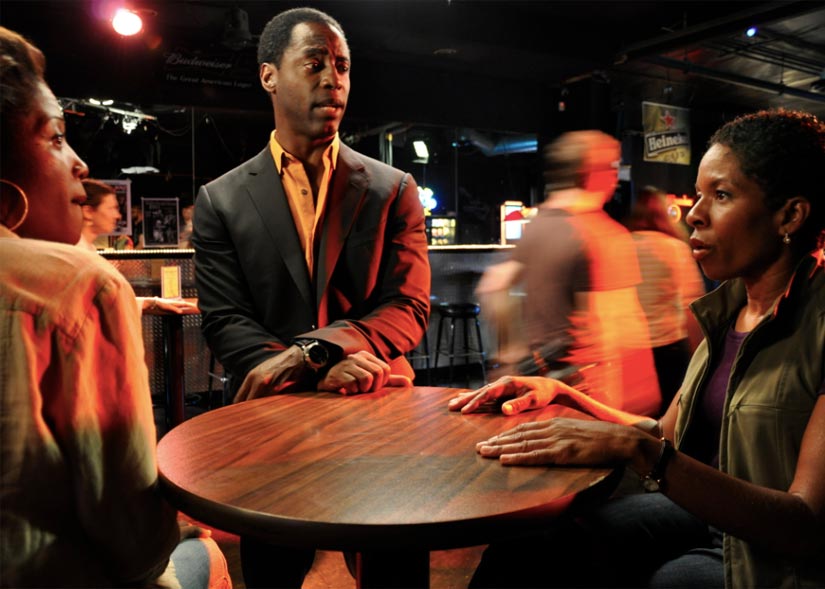
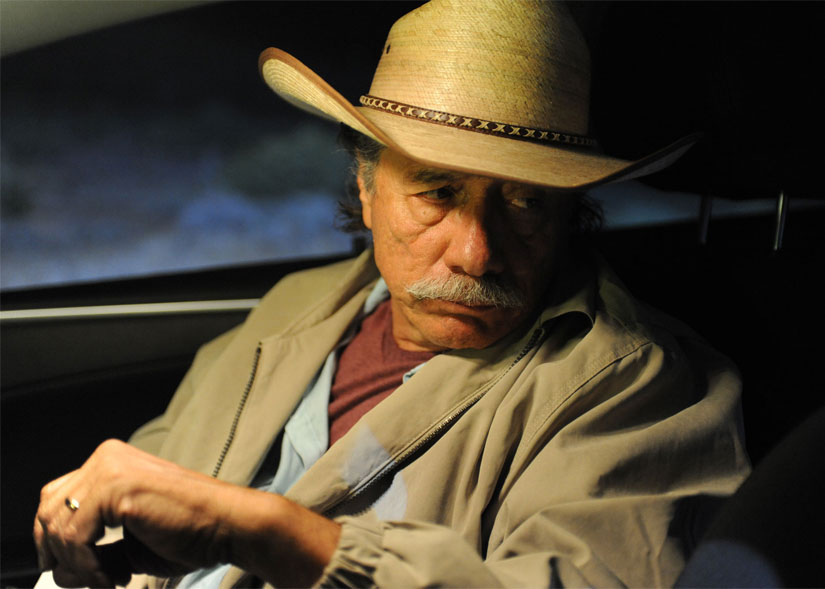
As a fan of writer/director John Sayles' previous film, Amigo, I had an idea of what to expect from Sayles' style of filmmaking. Go For Sisters' plot is compelling, but the true joy is in the adventure. Unfortunately, as was the case with Amigo, some of the writing and dialogue was incredibly bland. The interaction between Hamilton and Ross felt way too artificial. Ironically, the most interesting scenes were the ones involving Olmos' Freddy, whose path for redemption led him through Tijuana's criminal underbelly. Olmos is like a "lite" version of Danny Trejo as he carries a badass aura through Tijuana while he gathers intel on Bernice's son's whereabouts. In fact, a spin-off film covering Freddy Sanchez' adventures would be infinitely more interesting than Go For Sisters.
What we have with Go For Sisters is a character drama that isn't super dramatic or captivating. The adventure is way more interesting as the subject matter of border crossing is something I'm genuinely into, but the actual human component of the film, are so bland and boring. Go For Sisters takes a great topic, but bogs it down with an attempt at dramatizing the buddy/road film.
Go For Sisters is a character film in which the characters themselves are the weak point. Yet in saying this, the film isn't all that bad. It has all the right components to make a good film, it's just that the interaction between characters just feels like it's missing that certain "something" that would make it special.
Score: 6 out of 10
[RH Review] Charlie Countryman
I've felt mixed about Charlie Countryman ever since the first trailer was released some time ago. On the one hand, I was intrigued by the visual style and twisted narrative. At the same time, festival reviews for the film were really mixed. Then, of course, there's the matter of Shia LaBeouf, a personal favorite of mine who hasn't been on the best side of critical reviews due to his roles in the Transformers films and some of the missteps he made earlier in his career.
Nevertheless, I still held out hope for Charlie Countryman, and with it, LaBeouf's true potential. Were my tempered expectations justified, blown away, or completely let down? Read on to find out.
[youtube id="k6gN1rBx2U8" mode="normal" align="center"]
Charlie Countryman
Director: Fredrik Bond
Rating: R
Release Date: November 15, 2013
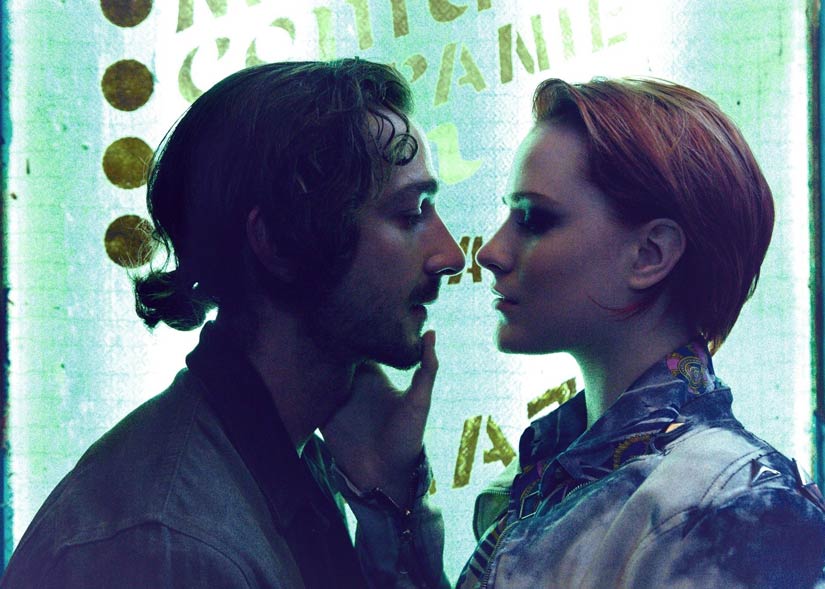
After Charlie's (LaBeouf) Mom passes away, he sees a vision of her instructing him to go to Bucharest. On the plane ride there, he befriends the passenger sitting next to him on the plane who inexplicably dies. Once again, Charlie sees a vision of the man instructing him to deliver a message to his daughter, Gabi (Evan Rachel Wood). After Charlie delivers the message, he falls in love with her; unfortunately, she's still legally married to a crime lord, Linus (Mads Mikkelsen). Before long, Charlie's quest for Gabi's love inserts him into the twist, seedy crime underbelly of Romania.
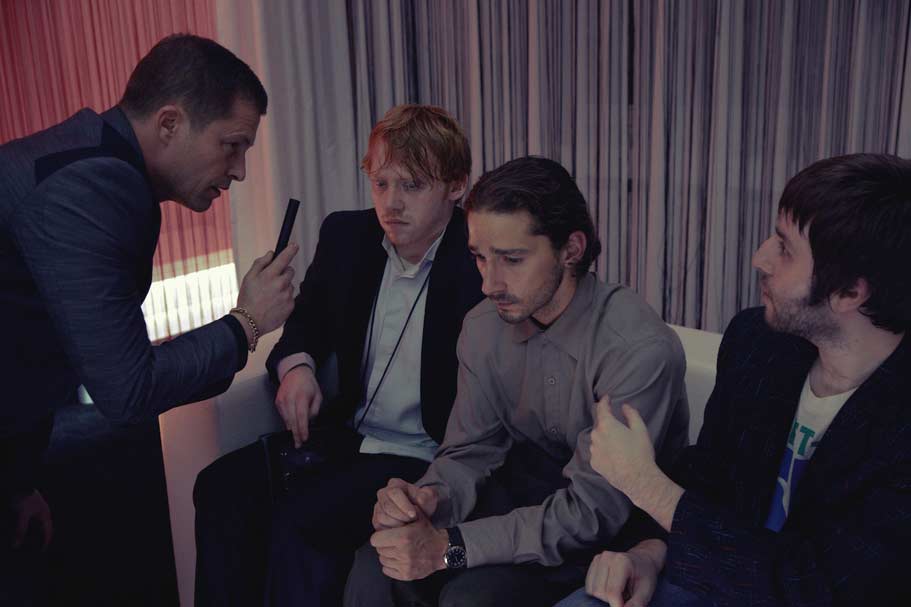
Charlie Countryman felt disjointed and messy in its direction. The film introduces Charlie as some sort of savant able to see the dead's souls and their ghosts after death... then no mention of it is brought up ever again. What began as a whimsical, magical film soon degenerates into a drug-filled neo-noir romantic drama... thriller. I appreciate first-time director Fredrik Bond's attempt to make not pigeonhole Charlie Countryman into one distinct genre. However, in doing so, he muddies the film's direction and identity. There's nothing wrong with manipulating genre conventions and finding interesting ways to play with them. The problem, though, is that a film needs a set vision.
Charlie Countryman is everywhere and nowhere at once. At its base, the film is a plodding romance film led by LaBeouf's earnest performance. Say what you will about his personal life or his past films - Shia LaBeouf gives his all in every film he's in, and is dedication and true belief in the Charlie Countryman character can't be ignored. However, because of his earnestness, at least in this film, he's unable to portray Charlie with subtlety. Maybe it's due to the writing or Charlie's character itself, but his character traits, especially with Gabi, come off as pitiful and desperate instead of lovingly. I'm a fan of LaBeouf, and I honestly believe his performance, no matter how many gripes I felt about it, is still one of the film's lone highlights.
Rupert Grint (Harry Potter) makes a small appearance in the film to inject some "comedy" into the film. However, all Grint and cohort James Buckley (The Inbetweeners) do is check off "sex-crazed/drug-addled" scenes from Bond's checklist. On the other side of the spectrum, Mikkelsen and Til Schweiger (Inglourious Basterds) are perfect as the antagonists/menacing threats that represent the "crime/thriller" portion of Charlie Countryman. Wood, meanwhile, dons a Romanian accent that works and doesn't work at the same time. Was it necessary? No. Does it hurt that she uses it? Not really. Still, it would have been great to see her act without some type of gimmick holding her back.

It's kind of fitting, then, that a film about the quest for love and discovery of self-identity is itself without an identity. Charlie Countryman tries to do too many things, yet doesn't do those things well. Outside of some shoddy writing, the acting is a real highlight. Visually, the film is gorgeous and captivating; it's just unfortunate that there's no real meat to Charlie Countryman to back the cinematography up. If Bond had simply had a tighter scope or focus on the film, Charlie Countryman could have been a sleeper hit. Instead, it just might drive you to sleep.
[RH Review] The Motel Life
What do you do when the world is constantly working against you? Do you simply give up and succumb to the inevitable defeat, or do you keep trudging along, hoping and praying for a break? Will it be too late if/when that break ever happens? Alan and Gabe Polsky's film adaptation of musician/writer Wily Vlautin's novel, The Motel Life, addresses exactly this conundrum. However, as compelling as the ideal behind the film is, it's the execution that truly matters.
Is The Motel Life an interesting look at what two brothers do in the face of defeat, or is it predictable and uninspired?
[youtube id="JE-O0H8pjhc" mode="normal" align="center"]
The Motel Life
Directors: Alan Polsky and Gabe Polsky
Rating: R
Release Date: November 8, 2013
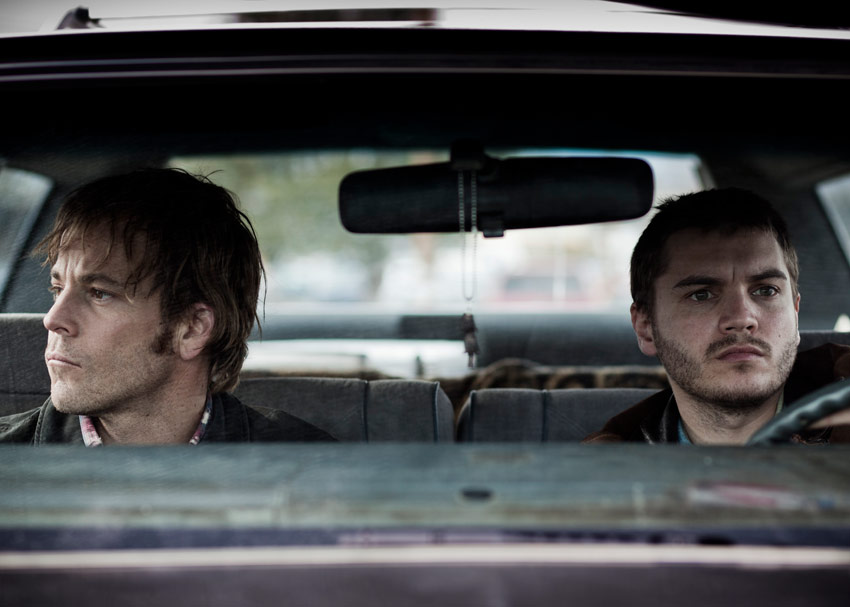
Frank (Emile Hirsch) and Jerry Lee (Stephen Dorff) are two close brothers that have never left each other's side after their Mom died when the two were teenagers. Rather than risk being separated by being sent to different foster homes, the two leave school for a life on the road. However, a tragic accident strikes as Jerry Lee loses the lower half of his right leg while attempting to hop a train. Years later, the two live in a motel in Reno, NV, working random jobs to make money.
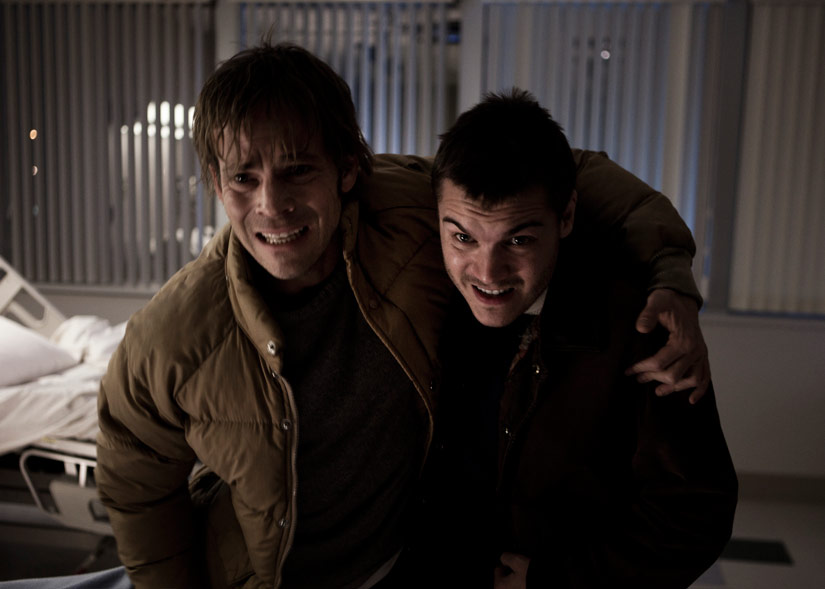
When Jerry Lee accidentally kills a teenage boy in a hit-and-run, his already existent feelings of worthlessness become even more magnified, weighing heavily down upon him. However, despite running off to avoid any police investigations, he returns to Reno. Meanwhile, Frank, already the burdened with the task of being the responsible brother, begins to succumb to his inherent depression, exacerbated by longings for his ex-girlfriend (Dakota Fanning) and a growing alcohol dependency. However, just when good fortune begins to turn for the Lee boys (thanks to the Buster Douglas-Mike Tyson fight, no less) and when Frank's personal situation begins to turn the corner, the brothers are forced to confront a turn of events that proves to be much darker than anything they've already faced.
Mixed into the film are various animated scenes narrated by Frank and implied to be based off of Jerry Lee's drawings (done by artist Mike Smith). These scenes fit contextually as stories Frank would tell Jerry Lee for comfort, but also add an extra layer to an otherwise straight-and-narrow indie film. The mixed media removes the audience out of the moment, yet is balanced by the entertaining and oftentimes raunchy and pornographic , further adding to the entertainment value.
Despite how dark and innately depressing the film's narrative can be, the chemistry between Hirsch and Dorff lightens the edges a bit. Sure enough, the highlights of the film are the performances delivered by the two leads. Whereas most films exploring sibling relationships would create some type of conflict between them, The Motel Life instead keeps the brotherly love central to the film.
Hirsch has played roles where the film itself overshadows his performances (Speed Racer, Killer Joe) and where his performance truly elevates the film into becoming something special (Into the Wild). His turn as Frank Lee falls between the two extremes, which is very much welcome. You can't resist yearning to help Frank as he slowly becomes a victim to his growing alcohol abuse. Alongside Hirsch is Dorff's Jerry Lee, who spends the film fraught with guilt over the teenager's accidental murder, but also the guilt of his lack of self-worth holding Frank back. The duality of Jerry Lee's character as both Frank's comedic foil, but also the most suffering character is finely portrayed by Dorff's performance.

The great performances from Hirsch and Dorff are definitely a highlight of an above-average film. The plot can get a bit messy, especially with the subplot involving Frank attaining money (despite the specific boxing scene being otherwise entertaining), and the aforementioned animated scenes are fun distractions, but distractions nonetheless. However, The Motel Life has the potential to attract and appeal to the right audiences. The duality between internal and external conflicts of the plot paired with memorable performances from Hirsch and Dorff will be enough for most, but the predictable third act and spotty narrative holes might turn others away.
Score:  6.5 out of 10
[RH Review] Big Sur
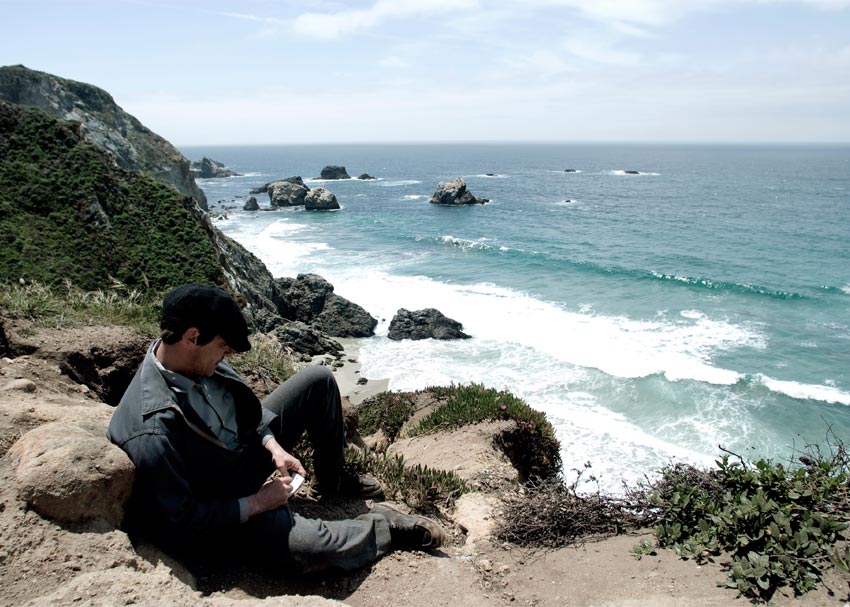
When Jack Kerouac wrote On the Road, he was in his mid-to-late 20s, earnest and optimistic about what America could offer him. However, by the time On the Road was published, Kerouac was in his mid-30s, already a witness to the country's rapidly evolving landscape. Feeling jaded and unnerved by the sudden success of On the Road and readers' misunderstanding of who Kerouac actually was (the near middle-aged disillusioned Kerouac and not the desperately optimistic mid-20s Sal Paradise), he visited fellow Beat writer Lawrence Ferlinghetti's cabin in Big Sur, California to unwind, serving as the basis of 1962's Big Sur.
Does the Big Sur adaptation capture Kerouac's language-heavy prose, or is it encumbered by Kerouac's writing style?
[yahoo id="movies.yahoo.com/video/big-sur-trailer-205027055" mode="normal" align="center"]
Big Sur
Director: Michael Polish
Rating: R
Release Date: November 1, 2013
Jack Kerouac (Jean-Marc Barr), jaded with the success with On the Road, travels to Lawrence Ferlinghetti's cabin in Big Sur to escape from city life. However, after three weeks, he becomes restless and yearns to return. Over the course of three visits between San Francisco and Big Sur, he reconnects with Neal Cassady (Josh Lucas), the proclaimed hero of On the Road, Carolyn Cassady (Radha Mitchell), Michael McClure (Balthazar Getty), Lew Welch (Patrick Fischler), and others.
In an attempt to help Kerouac break out of his slump, Cassady introduces him to his mistress, Billie Dabney (Kate Bosworth). However, Cassady finds himself jealous of the budding relationship. Throughout the affair and the drinking binges, Kerouac begins to slowly descend into alcohol abuse. With his dependence on drinking and the pre-existing despondence he already faced, he falls into a downward spiral plaguing both his physical and emotional well-being.

Kerouac wrote in On the Road, "...nobody knows what's going to happen to anybody besides the forlorn rags of growing old..." Big Sur is the romantic follow-up to those exact words. It's a sad look at what the author faced, especially with knowledge that he died a short seven years after Big Sur's publication. Of course, this is a review of the film adaptation and not the novel itself, and many things were lost in translation from the pages to the screen.
Obviously, the biggest disparity between the two is the inability to translate Kerouac's prose into a film. As seen in Walter Salles' On the Road, it's tough to adapt a Kerouac novel. His writing style is very language-heavy prose with some plot present, but the true heart/art of Kerouac's writing is found in his ambient word association and the beat and rhythm of it all. Director Michael Polish attempts to emulate this with voiceovers taken directly from the novel. The opening scenes of Bixby Beach supplement the voiceovers, but it's not enough.
That's not to say that Barr and the rest of the cast didn't deliver great performances. Compared to Kill Your Darlings' Jack Huston and On the Road's Sam Riley, Big Sur's Jean-Marc Barr has been the best big screen Kerouac I've seen. He's inquisitive, wise, and self-destructive in the way Huston and Riley weren't. Granted, the comparison comes with an asterisk, as these are three different films, actors, directors, novels, and phases in Kerouac's life. However, Huston and Riley didn't capture Kerouac's essence.

Adapting Jack Kerouac is hard, yet Polish did what he could to do both Big Sur and Kerouac justice. Unfortunately, the mystery of adapting Kerouac novels to the big screen continues unsolved. Beat Generation fans will enjoy seeing some of their favorite writers portrayed on the big screen, but there's little appeal to general audiences.
Score: 5.5 out of 10

[CIFF Capsule Review] How I Live Now
[Ruby Hornet will be attending the 49th Chicago International Film Festival from 10/10 - 10/24. Be sure to follow along as we bring you coverage from the longest-running competitive international film festival in the country. You can find all of our coverage from this year's CIFF here.]
How I Live Now
Director: Kevin MacDonald
Country: United Kingdom
Release Date: October 15, 2013 (CIFF)
[youtube id="7It6b6QPhDQ" mode="normal" align="center"]
Daisy (Saoirse Ronan) is a selfish nihilist sent to the English countryside to stay with family friends due to growing military strife in the United States. While her "cousins' (not blood-related) try their best to make her feel welcome and at home, she's cold and unjustifiably mean-spirited towards them. When she begins to open up and fall for the eldest child, Edmund, she lets down her guard in the name of live. However, like clockwork, the terrorist threat reaches England, causing the country to fall under military control. When Edmund and his brother Isaac are separated from Daisy and little sister Piper, Edmund and Daisy make a pact to find each other at the countryside home.
How I Live Now is a sappy romance story posing as a survival film... or maybe it's the other way around? The emotional cues that should bring empathy to audiences are so wooden and unbelievable. Daisy's "transformation" from total bitch to selfish bitch is maddening. Even while the country quickly becomes a military state and she has her younger cousin under her responsibility, it's obvious that she only cares to return to Eddie. The ending itself is so sappy and uncharacteristic. What about mourning over Isaac? Total blame can't be laid on director Kevin MacDonald and the film's writers, since How I Live Now is based off of a novel. Still... still... I'm shaking my head just thinking about this film.
Score: 4.5 out of 10
[CIFF Capsule Review] Breathe In
[Ruby Hornet will be attending the 49th Chicago International Film Festival from 10/10 - 10/24. Be sure to follow along as we bring you coverage from the longest-running competitive international film festival in the country. You can find all of our coverage from this year's CIFF here.]
Breathe In
Director: Drake Doremus
Country: United States
Release Date: October 19, 2013 (CIFF)
[youtube id="qjPReJ2Jy8I"]
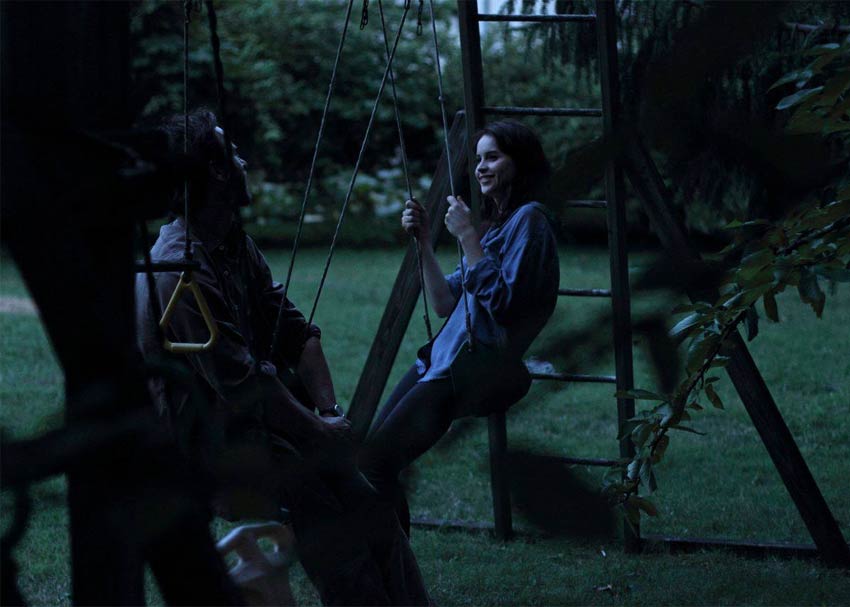
Keith (Guy Pearce) is a piano teacher and aspiring cellist for the New York Symphony Orchestra with a loving wife (Amy Ryan) and daughter (Mackenzie Davis). When Sophie (Felicity Jones) arrives as part of a foreign exchange program, she opens up deep questions within Keith's mind that he already had, including relocating to Manhattan from the suburbs and leaving his teaching job. However, as Sophie and Keith grow closer, their relationship tiptoes into romantic territory, threatening to ruin the family's lives.
Breathe In is similar to director Drake Doremus' previous film, Like Crazy, with its intimate look at relationships. However, he expands on his style by focusing more on the auxiliary characters outside of the main relationship. The film's perspective is still coming from Keith and Sophie, but you can still see the strife and devastation the two are causing. Like Crazy was insular, which fit the film's premise, but it's good to see that Breathe In retains the relationship depth of Like Crazy while still being able to not be so closed off. If she wasn't already one of my favorite young actresses, Felicity Jones' performance in Breathe In solidifies her stance as one of the actresses you have to keep your eyes on.
Score: 7 out of 10