
[Sundance Review] White Shadow
[Ruby Hornet will be at Sundance Film Festival 2014 providing coverage of the festival's 30th year. Keep it tuned to Ruby Hornet this week as we share reviews, interviews, photos, and more at one of the country's largest film festivals.]
White Shadow
Director: Noaz Deshe
Rating: N/A
Release Date: January 17, 2014 (Sundance)
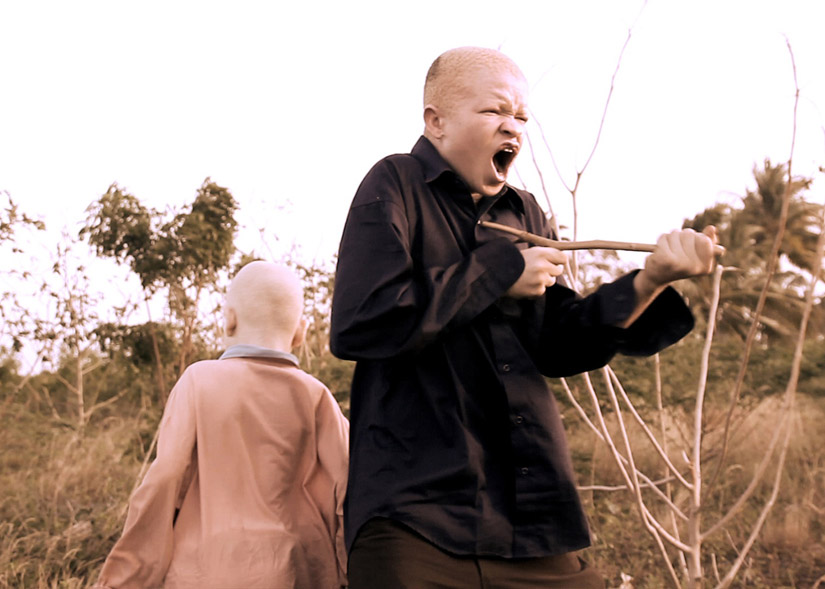
After witnessing the brutal murder of his father, Alias is sent off by his mother to live with his uncle, Kosmos, in the city away from their small shanty town. While he hustles drivers at busy intersections to buy various wares and technological parts, Alias faces torment from those around him due to his albinism. As Kosmos faces problems of his own, Alias finds a safe place to stay in a special home for albino children... until the unthinkable happens.
White Shadow deals with the rise in albino murders in Tanzania where witch doctors would pay large amounts of money for albino limbs due to their "magical powers." The film isn't some counter-active, social commentary on the practice; rather, it paints a fictional narrative around the unfortunate realities that Tanzanian albinos face.
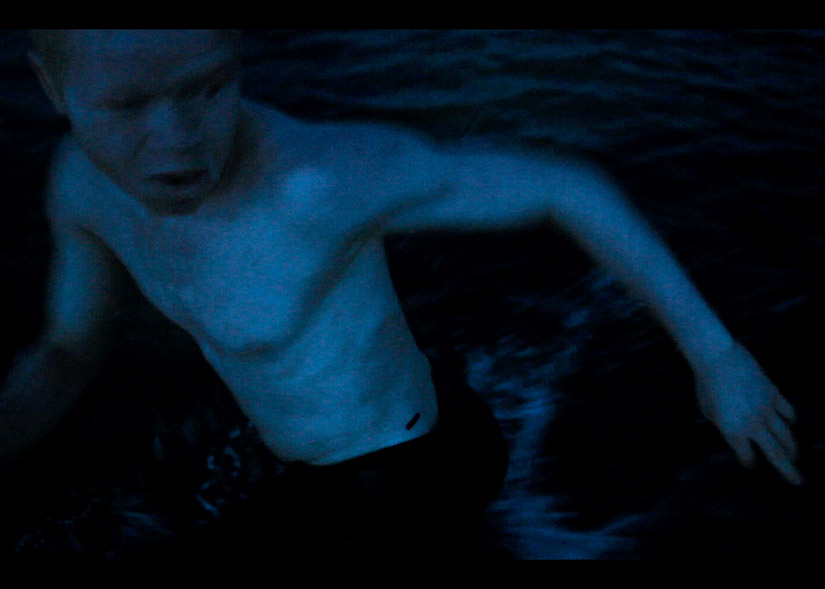
The main problem I had with White Shadow was how it lacked direction for the majority of the film. The beginning of the film is a whirlwind of confusion, the middle begins to take form while still being intercut with flashbacks (flash forwards? side flashes?), and the final act throws it all together in an intensely violent rush. However, as gripping as the final act is, it's not enough to make up for the confusion and slow moving of the first two acts.
The subplot involving Alias and Kosmos that made up the majority of the film began to gather steam, only to be displaced by Kosmos' own narrative arc. In a way, the two are intertwined, both narratively and thematically, as they both face an unsure future as wanted men - Alias for his albinism, Kosmos for his debt. It's a compelling duality that represents something deeper that the film could have latched on to if only it were a bit more focused and refined. As it stands, however, White Shadow is simply a shadow of what it could have ultimately been.
[Sundance Review] Kumiko, the Treasure Hunter
[Ruby Hornet will be at Sundance Film Festival 2014 providing coverage of the festival's 30th year. Keep it tuned to Ruby Hornet this week as we share reviews, interviews, photos, and more at one of the country's largest film festivals.]
Kumiko, the Treasure Hunter
Directors: David Zellner
Rating: N/A
Release Date: January 20, 2014 (Sundance)
Films affect us in the most mysterious ways. For some, we find inspiration and influence in the art form. For others, we're absorbed into the universe and fall in love with the romantic notions of a cinematic life. There's no denying the effect art has on our everyday lives, but we can't succumb into the fictional universes infiltrating our minds. Exactly how far can we allow films to affect us?
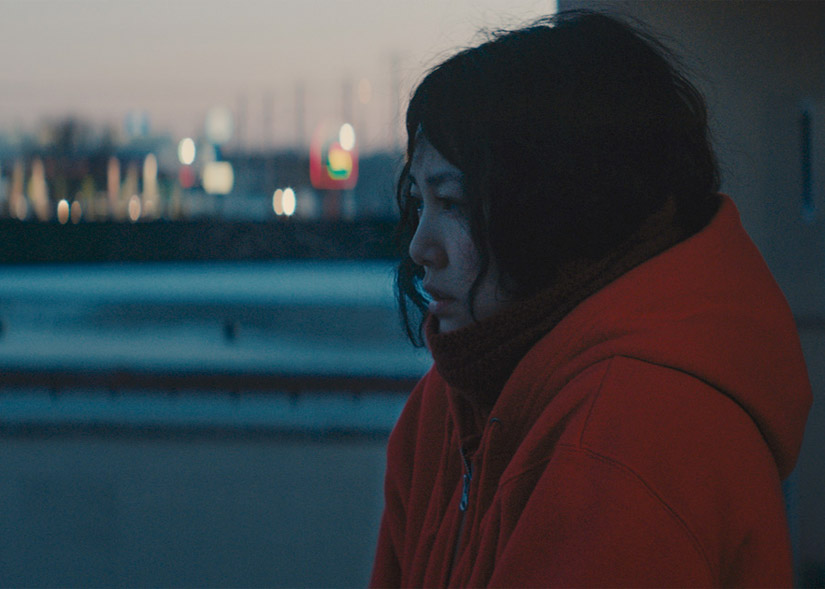
Kumiko (Rinko Kinkuchi) is a loner with no real direction in life. While the rest of her co-workers genuinely love their positions as office workers, she doesn't find the same joy out of the monotony of her day-to-day life. Even her Mother constantly rains doubt onto her, badgering Kumiko about her lack of drive and interest in marrying and starting a family. There are only two beams of light in Kumiko's life: her bunny, Bunzo, and a delusional plan to unearth the buried treasure in The Coen Brothers' Fargo. Exactly how far Kumiko lets her delusions take over could represent the turning point she desperately needs in her life, no matter the ramifications.
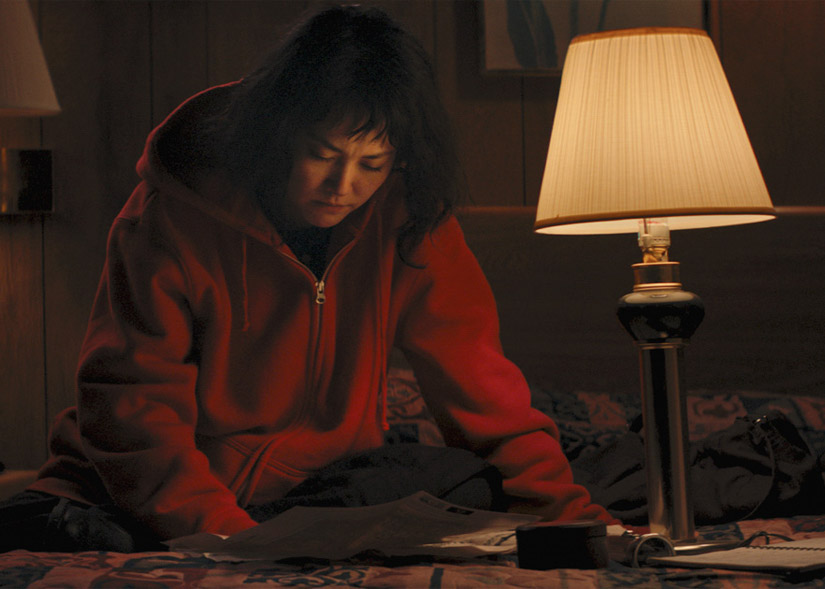
Kumiko, the Treasure Hunter is set up as a road film, with the first half of the film taking place in Japan and the second taking place in Minnesota. The main source of conflict in the film harkens to the ideals of the Japanese social structure and how Kumiko simply doesn't fit into it. The rigors of finding a good job, a good husband, and beginning a family at a young age carry over Kumiko's head like an unrelenting raincloud. She finds her escape through the Coen Brothers classic, both figuratively and literally, ultimately falling down the rabbit's hole on a journey that, for better or worse, is heartbreaking in how delusional her psyche really is. Kinkuchi, best known for her role as Mako Mori in last year's Pacific Rim, deftly carries the weight of the film on her shoulders, her physical and emotional vulnerability complementing her character's.
Another high point of Kumiko, the Treasure Hunter is not found in the film's plot or acting, but in its soundtrack. Indie/electronic band The Octopus Project scored the film with its airy, atmospheric music matching Kumiko's quiet journey from Japan to Minnesota. The film received a Jury Award for their Musical Score, and it's not hard to see why.
Kumiko, the Treasure Hunter is a sad character study. Every break in which you expect to find Kumiko snap out from her fantasy world is shattered whenever she makes a self-assured decision to continue on her journey. Yet, in spite of acknowledging that the journey won't end well, you can't help but cheer her on and hope that somehow, someway, there really is a treasure underneath that X.

[Sundance Review] To Kill a Man (Matar a un hombre)
[Ruby Hornet will be at Sundance Film Festival 2014 providing coverage of the festival's 30th year. Keep it tuned to Ruby Hornet this week as we share reviews, interviews, photos, and more at one of the country's largest film festivals.]
To Kill a Man (Matar a un hombre)
Director: Alejandro Fernandez Almendras
Rating: N/A
Release Date: January 17, 2014
How far would you go to protect your family? With our backs to the wall and facing a large threat, I'd imagine the answer would be, "Whatever it takes." However, not everybody can truly be prepared for the ramifications of their actions, even if it's in the name of safety and protection. In Alejandro Fernandez Almendras' To Kill a Man, an unassuming, middle-class husband and father of two is prodded and pushed to the brink until he takes matters into his own hands. However, the consequences of his actions are too much for him to bear for long.
Jorge (Daniel Candia) is a passive man who falls victim to bullying from some neighborhood scumbags led by one man, Kalule. When Jorge's son, Jorgito, decides to defend his father, things escalate when Kalule shoots him, then shoots himself to stage an act of defense. However, Kalule is sent to prison for a small period of time; upon his return, tensions escalate as he stalks and threatens the entire family until Jorge simply takes matters into his own hands.
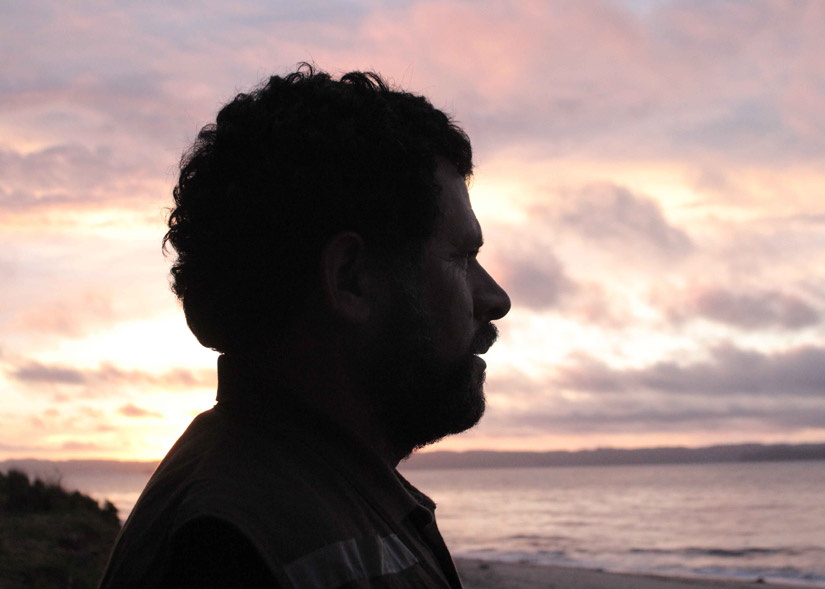
To Kill a Man is a character study analyzing the effects a murder can have on a man. One of the most prevailing themes found in the film is the idea of masculinity and gender. Early in the film, Jorge's masculinity is ridiculed and taunted by the neighborhood scoundrels. His passive manner isn't exactly the most masculine, especially in Latino cultures. Even at his breaking point, Jorge isn't a hyper-masculine being; rather, he's still unconfident and unsure of his actions, even after the line is crossed.
As with most character studies, To Kill a Man is a quiet, slow-moving film. Because of this, there's a tendency for the film to plod and move too slowly at times. There may not be enough driving action to keep certain audiences engaged. However, those that do hang on will enjoy Jorge's journey and Almendras' exploration into the mind of a man desperate to do right by his family.
[Sundance Review] Cooties
[Ruby Hornet will be at Sundance Film Festival 2014 providing coverage of the festival's 30th year. Keep it tuned to Ruby Hornet this week as we share reviews, interviews, photos, and more at one of the country's largest film festivals.]
Cooties
Directors: Jonathan Milott and Cary Murnion
Rating: N/A
Release Date: January 18, 2014
Everybody growing up remembers cooties. At one point in time, we've all received a cootie shot after the patented "circle, circle, dot dot" prescribed to us by our caring friends. In a way, the cootie shot was a rite of passage to protect us from the other sex until, well, we began thinking about sex. However, imagine if "cooties" were real, and the virus ended up being something much much worse than getting boy/girl germs on you?
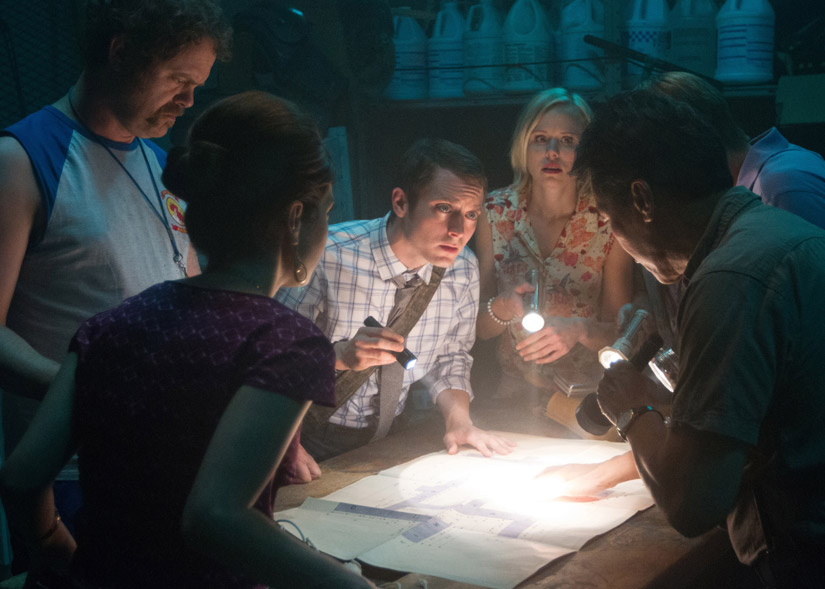
Jonathan Milott and Cary Murnion's Cooties addresses this very idea, albeit in a dark, and twisted manner. The "cooties" in Cooties are nothing more than an exaggerated result of diseases meat getting eaten by a young girl who falls ill. As her sickness manifests in something much more sinister, spreading across an entire school full of summer school children, it's up to the teachers, led by Clint (Elijah Wood), an aspiring writer who subs in for a sick teacher at his childhood elementary school, his childhood friend, Lucy (Alison Pill), her boyfriend, Wade (Rainn Wilson), and the other fellow teachers, played by Jack McBrayer (30 Rock), Rainn Wilson (The Office), Leigh Whannell (Saw III), and Nasim Pedrad (SNL), to attempt the school with two young survivor before they become another cafeteria meal.

Cooties is like a zombie film, with the zombies played solely by children. The added wrinkle is kind of fun, with a handful of current/former teachers at my screening referring to the film as "cathartic." There's something fun about seeing adults attack little kids, albeit with the added caveat of them becoming monsters. However, beyond that dark twist (and what it says about our enjoyment in seeing kids being beaned with high speed baseballs and sliced with katanas), Cooties otherwise feels very run of the mill.
While the film starts on a high note and ends on an exciting level, the entire second act of the film just drags on and halts all the progression and energy up to that point. Some of the jokes don't really stick during the second act, either. Despite a cast full of sitcom stars and comedic actors, Cooties was sorely lacking in the humor department. A minor role played by LOST's helped keep the film on a good, humorous tone, but ultimately, the laughs simply weren't there.
Cooties presented a twist to the typical zombie film, but only by a minimal margin. There's a sense of social commentary behind the outbreak, but again, it's nothing out of the ordinary that we've come to expect from the genre. It's fun, light, and could find a cult following from fans of the actor and genre, but everybody outside of those circles might want another cootie shot.
[RH Review] Hours
I don't know how to start this review. Do I keep it strictly focused on the film, or do I slant it towards Paul Walker and how Hours holds up in carrying his legacy alive following his untimely passing? It's hard to be critical of an actor's performance in light of their passing, especially when a film is released only weeks following their death. However, I can honestly say with dignity that Walker's performance in Hours is one of his best. However, is it enough to carry the entire film?
[youtube id="2wT4KPsy2gc" mode="normal" align="center"]
Hours
Director: Eric Heisserer
Rating: PG-13
Release Date: December 13, 2013
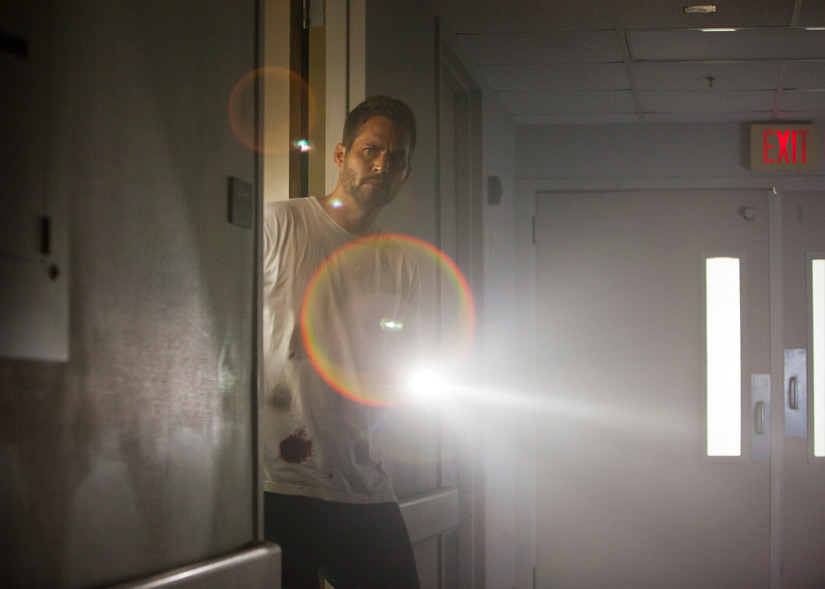
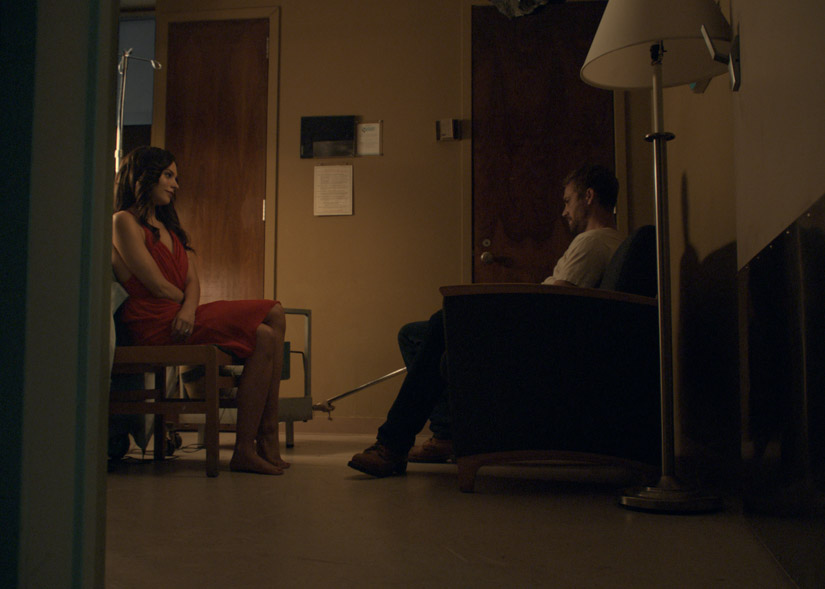
On the eve of Hurricane Katrina, Nolan (Walker) and his wife, Abigail (Genesis Rodriguez), are admitted to a hospital in New Orleans due to Abigail going through a premature labor. As the storm becomes stronger, Abigail's resolve weakens, dying in childbirth. As Nolan struggles with the loss of his wife, Katrina becomes stronger, forcing everybody in the hospital to evacuate. However, Nolan's premature daughter must stay connected to a neonatal incubator to stay alive. With the power diminishing and no help in sight, Nolan must protect his daughter at all costs with every passing minute turning into another grueling hour.
Walker may be best known as an action star because of his role as Brian O'Conner in the Fast & Furious films, but Hours was his attempt at displaying his dramatic range. Designed as an isolated character film, Hours trusts the entirety of the film on Walker's performance. The trust Heisserer had in Walker is paramount, and the actor made the most of it. He still plays the same everyman character he's known for, yet it fits entirely into what the film needed.
When one thinks of a character-driven, isolated film (re: Buried, 127 Hours), it's expected to be an introspective psychological character study. Hours, however, is built as, essentially, a one-character thriller. The conflict, Man vs. World, is framed through the crux of the film is put entirely on the timed mechanic of baby Abigail's survival. With the lack of power, Nolan is forced to use a backup generator to keep his daughter's breathing normal. However, it only holds a charge in three-minute increments, disallowing him from resting, but also actively searching for help. As the film goes on, the amount of time given per charge begins to diminish, and with it, Nolan's energy.
Over the course of the film, Nolan is faced with external threats that, honestly, take away from the film. I understand why looters were used as these threats - Hours is, after all, set during and in the wake of Hurricane Katrina, and looters played as much of a role as the storm itself. However, while their presence was meant to pose as another conflict to Nolan, it took away from the real threat. I wouldn't have removed them completely; rather, I would have used them differently. Again, I can understand their involvement in the film as the aforementioned secondary external threat and how the encounter coincides with Nolan's mental descent/heightened defense over his daughter.
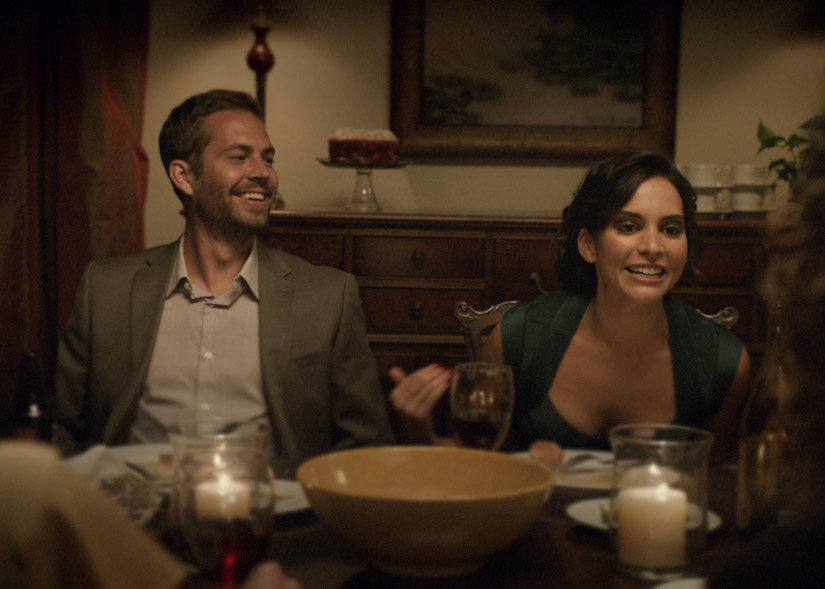
Early on, Hours began establishing itself as a father coping with the passing of his wife while developing an emotional connection to his newborn daughter, the struggle over having to reconcile the conflicting emotions following a death and birth, and the external conflict of Hurricane Katrina. Hours could have went many ways, whether it was an intensive psychological drama, an action/thriller, or many other routes. Instead, it shared bits and pieces from all of the avenues it could have followed. That decision takes away from the film's direction.
Ultimately, however, Hours is weighted on Walker's performance. His Nolan was similar to Bryan O'Conner, albeit reigned in, but Walker's dramatic chops were developing. As it stands now, Walker's performance in Hours was his best ever captured on the big screen. The trust Heisserer put in Walker's abilities was wholly justified, and it's unfortunate to know that we'll never see just how far he would have been able to take his acting abilities.
[RH Review] Ms. 45
After more than 30 years since its original release, Abel Ferrera's Ms. 45 has been resurrected as the next in line of Drafthouse Films' releases. Originally panned by critics, the film has garnered a cult following over the past three decades. With a new remastered, unrated cut, the film is returning to limited theaters and home video for a new generation of film audiences. However, will its cult status be justified in this age of new cinematic advancements, or will it be seen as an outdated blast from the past and nothing else?
[youtube id="dvlNU06HL74" mode="normal" align="center"]
Ms. 45
Director: Abel Ferrera
Rating: N/A
Release Date: December 13, 2013
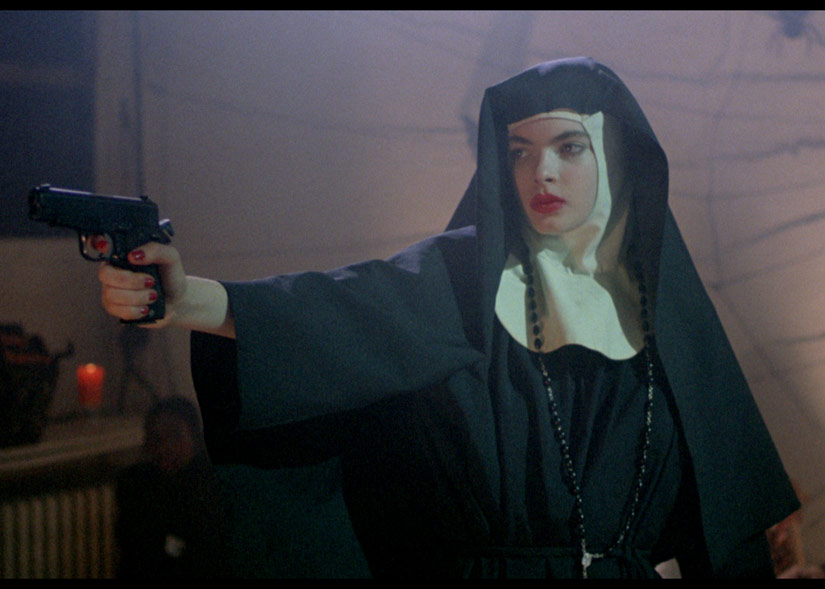
Thana (Zoe Tamerlis Lund) is a mute seamstress living and working in New York City. On her way home one day, she's viciously attacked and raped in an alley. During the encounter, a burglar breaks into her apartment and assaults her once she returns. However, during the incident, Thana is able to get the upper-hand, accidentally killing the assailant in the process. After dismembering his body, she takes his gun and begins venturing into the city, targeting horny men who may or may not pose as a threat to her. With her psyche diminishing, she begins to purposely bait men as a means of justifiably murdering them in a twisted sense of self-fulfillment.
By making Thana mute, other characters (obviously) have to speak for Thana, outside of the handful of times she directly communicates with written messages. Outside of the noted references/homages to the Swedish film Thriller - A Cruel Picture, what purpose does a mute protagonist fit? Outside of unnecessary exposition and having to audibly be presented to Thana's rationale, is there any real benefit to having Thana mute? In saying that, is there something wrong in keeping the film's protagonist silent? I don't have an answer for this right now, yet it was something I was wondering throughout the film's duration.

Now comes the actual crux of the review: the subject matter. I'll be perfectly blunt: An exploitation film like this would never fly under current MPAA guidelines. With censorship looming over the art of cinema, growing awareness of political correctness, and the internet's newfound embracement of feminism, does Ms. 45 get a "pass" because of its cult status and self-awareness of its genre (late '70s-esque exploitation)? Any modern film that featured a female protagonist (or any person, for that matter) getting raped and sexually assaulted without having a voice, figuratively and literally in this instance, would face so many objections. Is it fair to view the film's subject matter through the current, hyper-political lens we treat contemporary films? Probably not.
Then again, isn't that the whole basis for exploitation films? To take social norms, social taboos, and throw them out the window? Thana fits this super feminist role where she takes justice, no matter how misguided, into her own hands. But, at the same time, it's at the cost of her sanity and sexuality. As her mind begins to further twist and devolve, she begins to dress more provocatively to lure her prey in before killing them. I feel torn and conflicted over the film's content.
From a strictly technical standpoint, the acting is subpar and exaggerated, which is more of a reflection of the genre/times. The HD remastering helped the video fidelity and audio quality, but Ms. 45 was never a technical achievement, anyways. Again, this is due in part to its exploitation nature.
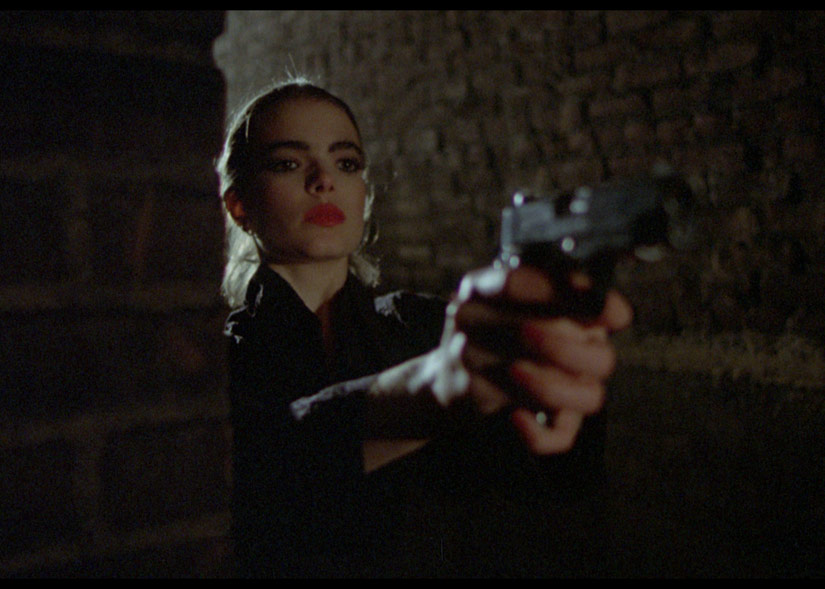
In 30 years, I feel that films and film audiences have grown by leaps and bounds. Films look more grandiose, subject matter is more introspective and entertaining... I can understand why the film has its cult following, but I just can't consider myself to be part of it. With its re-release for new audiences, I'm curious to see if audiences will accept it or malign it much in the same way it was so many years ago.
[RH Review] The Crash Reel
With the increasing dangers and illumination of brain injuries in sports, many steps and restrictions are put in place to ensure the safety of athletes. Sometimes, the decisions made are perceived as coddling and taking away from the sport itself, like the NFL, which has done everything in their power to cut down on concussions and head trauma despite fans' mixed responses to the new rules.
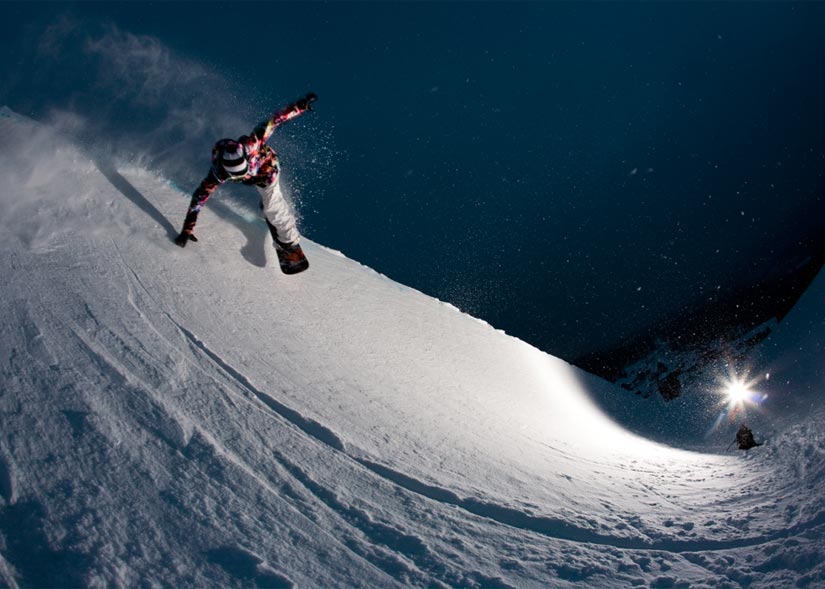
Action sports, from everything from snowboarding to BMX and everything in between, has grown exponentially, both in terms of popularity and exposure to the level of tricks. In saying that, the risk is higher than ever across the board. Unfortunately, many action sports athletes sacrifice their bodies for the sport they love. The Crash Reel is an Academy Award contender about one such athlete and his journey leading up to and following a traumatic brain injury.
[youtube id="Sj0vY2Nymqw" mode="normal" align="center"]
The Crash Reel
Director: Lucy Walker
Rating: N/A
Release Date: December 13, 2013
Kevin Pearce was, at one point in time, one of the best and most popular professional snowboarders alongside Shaun White. However, while training for the Vancouver 2010 Winter Olympics, Pearce suffered a tragic accident that threatened to end his professional snowboarding career. Told through archival footage from Pearce's beginnings in the sport to his rehabilitation following the injury, The Crash Reel examines the real life struggles one faces after a life-changing accident.
From slowly having his dreams to return to the sport he loves taken away from him to transitioning into the next stage in his life, The Crash Reel presents Pearce as an everyman to represent life after near-death. Intertwined with Pearce's stories are stories about other action sports athletes who have faced and, unfortunately, succumbed to traumatic brain injuries, such as famed Women's freestyle skier and pioneer, Sarah Burke.
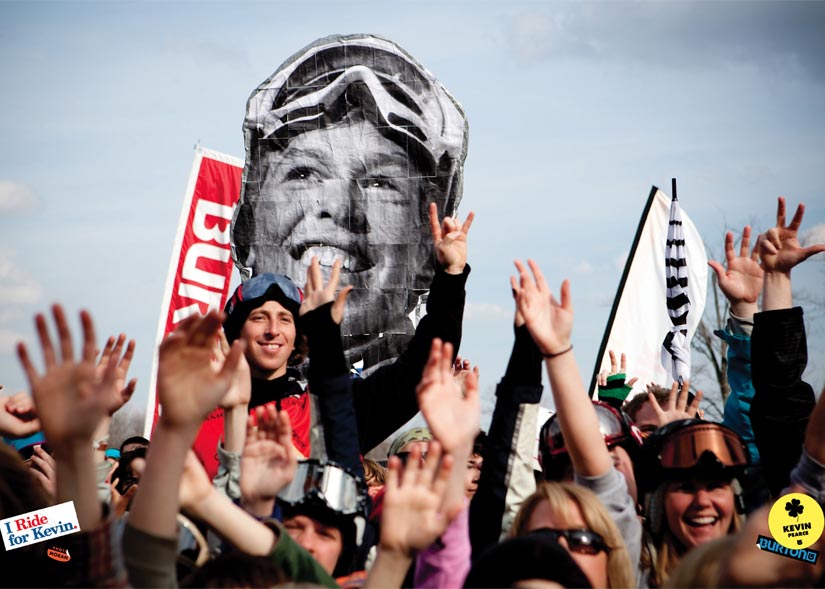
As previously mentioned, the documentary features archival footage used to follow Pearce's journey. Director Lucy Walker created a narrative that highlights Pearce's rise as a young, aspiring snowboarder, establishing an early friendship-turned-rivalry with fellow snowboarder Shaun White, the meteoric rise in the sport as White's foil, a projected medal winner at the 2010 Winter Olympics, the trials and tribulations faced following the accident, and the necessary steps to create a new life from there. In past documentary reviews, I've noted how a successful documentary can be viewed and weighted by the subject matter and how that topic is analyzed and delivered. A problem I face with them is not being attracted to them if the subject matter doesn't appeal to me. Of course, the best docs are the ones that gave a universal appeal despite its subject matter; in saying that, it's a bit hypocritical since the subject matter itself is what will garner appeal.
The Crash Reel may not have the initial attraction to those who aren't familiar with snowboarding or Kevin Pearce. However, once drawn in, the viewer understands that the documentary may be framed around Pearce's individual story, but it's one that can represent and help humanize and generalize the struggles that both an individual and their family faces when attempting to piece their lives back together. By focusing on somebody who was so young and in a somewhat prominent sport, it has a general appeal.

The Crash Reel illuminates the inherent dangers that every snowboarder faces. By using Pearce as the documentary's focal point, Walker and her team analyze some of the unseen effects a traumatic brain injury have on everybody involved. Pearce's story isn't necessarily used as a cautionary tale for others, but instead as a story for perseverance. As a potential Oscar contender, it may be one of the best documentaries I've seen this year.
Score:  8 out of 10
[RH Review] Big Sur
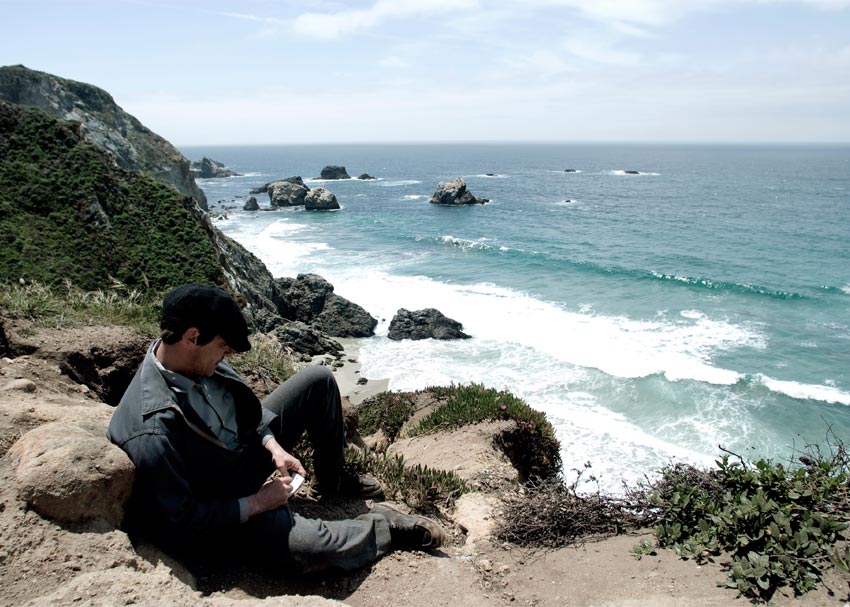
When Jack Kerouac wrote On the Road, he was in his mid-to-late 20s, earnest and optimistic about what America could offer him. However, by the time On the Road was published, Kerouac was in his mid-30s, already a witness to the country's rapidly evolving landscape. Feeling jaded and unnerved by the sudden success of On the Road and readers' misunderstanding of who Kerouac actually was (the near middle-aged disillusioned Kerouac and not the desperately optimistic mid-20s Sal Paradise), he visited fellow Beat writer Lawrence Ferlinghetti's cabin in Big Sur, California to unwind, serving as the basis of 1962's Big Sur.
Does the Big Sur adaptation capture Kerouac's language-heavy prose, or is it encumbered by Kerouac's writing style?
[yahoo id="movies.yahoo.com/video/big-sur-trailer-205027055" mode="normal" align="center"]
Big Sur
Director: Michael Polish
Rating: R
Release Date: November 1, 2013
Jack Kerouac (Jean-Marc Barr), jaded with the success with On the Road, travels to Lawrence Ferlinghetti's cabin in Big Sur to escape from city life. However, after three weeks, he becomes restless and yearns to return. Over the course of three visits between San Francisco and Big Sur, he reconnects with Neal Cassady (Josh Lucas), the proclaimed hero of On the Road, Carolyn Cassady (Radha Mitchell), Michael McClure (Balthazar Getty), Lew Welch (Patrick Fischler), and others.
In an attempt to help Kerouac break out of his slump, Cassady introduces him to his mistress, Billie Dabney (Kate Bosworth). However, Cassady finds himself jealous of the budding relationship. Throughout the affair and the drinking binges, Kerouac begins to slowly descend into alcohol abuse. With his dependence on drinking and the pre-existing despondence he already faced, he falls into a downward spiral plaguing both his physical and emotional well-being.

Kerouac wrote in On the Road, "...nobody knows what's going to happen to anybody besides the forlorn rags of growing old..." Big Sur is the romantic follow-up to those exact words. It's a sad look at what the author faced, especially with knowledge that he died a short seven years after Big Sur's publication. Of course, this is a review of the film adaptation and not the novel itself, and many things were lost in translation from the pages to the screen.
Obviously, the biggest disparity between the two is the inability to translate Kerouac's prose into a film. As seen in Walter Salles' On the Road, it's tough to adapt a Kerouac novel. His writing style is very language-heavy prose with some plot present, but the true heart/art of Kerouac's writing is found in his ambient word association and the beat and rhythm of it all. Director Michael Polish attempts to emulate this with voiceovers taken directly from the novel. The opening scenes of Bixby Beach supplement the voiceovers, but it's not enough.
That's not to say that Barr and the rest of the cast didn't deliver great performances. Compared to Kill Your Darlings' Jack Huston and On the Road's Sam Riley, Big Sur's Jean-Marc Barr has been the best big screen Kerouac I've seen. He's inquisitive, wise, and self-destructive in the way Huston and Riley weren't. Granted, the comparison comes with an asterisk, as these are three different films, actors, directors, novels, and phases in Kerouac's life. However, Huston and Riley didn't capture Kerouac's essence.

Adapting Jack Kerouac is hard, yet Polish did what he could to do both Big Sur and Kerouac justice. Unfortunately, the mystery of adapting Kerouac novels to the big screen continues unsolved. Beat Generation fans will enjoy seeing some of their favorite writers portrayed on the big screen, but there's little appeal to general audiences.
Score:  5.5 out of 10