
[CIFF Capsule Review] La Paz
[Ruby Hornet will be attending the 49th Chicago International Film Festival from 10/10 - 10/24. Be sure to follow along as we bring you coverage from the longest-running competitive international film festival in the country. You can find all of our coverage from this year's CIFF here.]
La Paz
Director: Santiago Loza
Country: Argentina
Release Date: October 18, 2013 (CIFF)
[youtube id="j4XHZfq291E" mode="normal" align="center"]
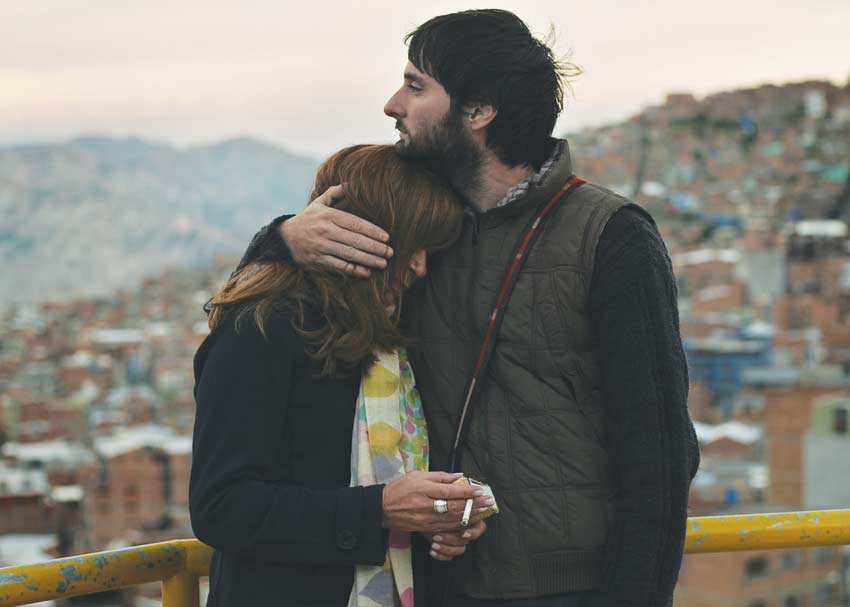
Returning home after a stay in a psychiatric clinic, Liso finds himself coddled by his parents and unable to reconnect with his ex-girlfriend. The only people he can connect with, however, are his elderly grandmother and his parents' maid. La Paz examines Liso's attempts to simply find himself and connect with his loved ones while not relapsing into a schizophrenic episode.
La Paz is a quiet film (as have the majority of the Latin American films from CIFF this year), but not all too compelling. The film doesn't exactly tug on your emotional heartstrings the way films like this normally would. Instead, it's a boring tread through Liso's recovery without giving any deep insight into his mind.
Score:  5 out of 10

[CIFF Capsule Review] Miele
[Ruby Hornet will be attending the 49th Chicago International Film Festival from 10/10 - 10/24. Be sure to follow along as we bring you coverage from the longest-running competitive international film festival in the country. You can find all of our coverage from this year's CIFF here.]
Miele
Director: Valeria Golino
Country: Italy
Release Date: October 15, 2013 (CIFF)
[youtube id="Ncvgarr03VY" mode="normal" align="center"]
Miele is a young woman who delivers assisted suicides for families whose loved ones want to dictate how they die rather than succumb to the prolonged process of death. When she's assigned to assist a wealthy, physically healthy man, she has a change of morality and does what she can to prevent the man from killing himself. Will she be able to deal with the moral conflict the assignment presents while she deals with her own personal problems?
I was expecting Miele to be this cerebral character study analyzing the conscience of a young woman who essentially kills people for a living. The problem with going into films with expectations is that, nine times out of 10, those expectations are never met. Miele did touch upon the psychology conflicting the protagonist's mind, but also muddies it all up with a sexual affair she has as a means of balancing her "professional" life with her "personal" life. What results is a film that feels like it's attempting to do and say too much in a limited space.
Score: 5 out of 10
[CIFF Capsule Review] A Pact
[Ruby Hornet will be attending the 49th Chicago International Film Festival from 10/10 - 10/24. Be sure to follow along as we bring you coverage from the longest-running competitive international film festival in the country. You can find all of our coverage from this year's CIFF here.]
A Pact
Director: Denis Dercourt
Country: Germany and France
CIFF Screenings: October 20, 2013 (8:30pm), October 21, 2013 (1:00pm)
[youtube id="9AYF_v5RmwQ" mode="normal" align="center"]
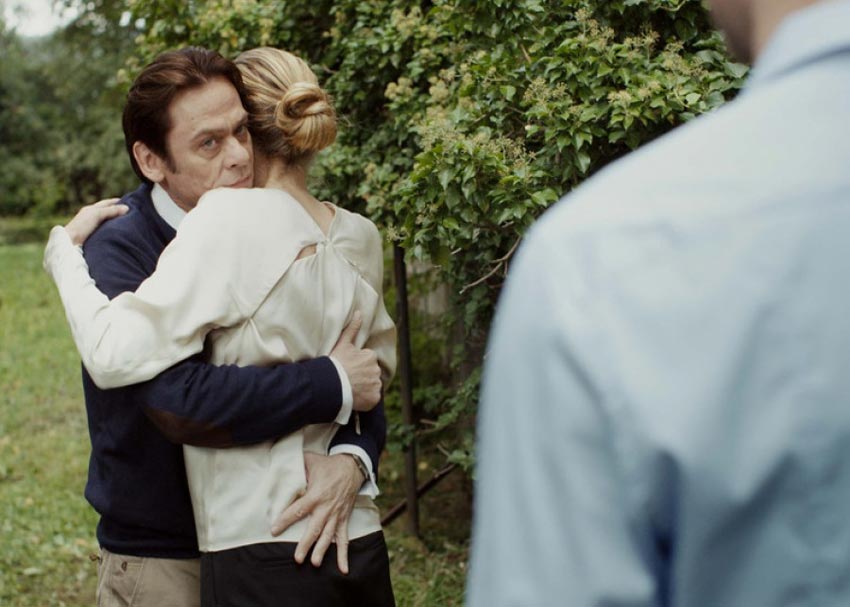
During the mid-'80s in Germany, Paul tricks Georg into "handing over" his girlfriend, Anna, by forging a handwritten love letter. In exchange, Georg makes Paul agree to a pact stating he can have Anna or someone exactly the same whenever he wants. Paul then chooses a girl for Georg to take. Decades later, Paul and Anna are happily married with two teenage kids when Georg returns as Paul's boss. Following his arrival, multiple situations arise, causing Paul's paranoia to grow over his old friend. However, who is really threatening whom?
A Pact is a dark psychological thriller about one secret that inexplicably took over the lives everybody involved, both directly and indirectly. The film plays out much like a play or an opera with its extremely high dramatic tone, classical, orchestral musical scores, and even leitmotifs that set the tone for upcoming scenes. A Pact sets a tense tone that most other so-called thrillers wished they could create and maintain. Once you begin to get a grasp on the narrative and what's at play, multiple twists and surprises occur, leaving audiences on the edges of their seats and constantly guessing what comes next.
Score: 7 out of 10
[CIFF Capsule Review] Salvo
[Ruby Hornet will be attending the 49th Chicago International Film Festival from 10/10 - 10/24. Be sure to follow along as we bring you coverage from the longest-running competitive international film festival in the country. You can find all of our coverage from this year's CIFF here.]
Salvo
Directors: Fabio Grassadonia and Antonio Piazza
Country: Italy
CIFF Screenings: October 20, 2013 (6:15pm), October 22, 2013 (8:00pm)
[youtube id="Of6oqhEWLE0" mode="normal" align="center"]
Salvo is about the eponymous Salvo, a hitman for the Sicilian mafia, who inexplicably shows grace on the blind sister, Rita, of a mob boss that betrayed and took a hit on him. After taking her to an abandoned warehouse for protection, the mafia questions whether he completed the job or not. Once they find out that he kept the visually-impaired witness alive, Salvo must find a way to protect both of their lives.
The first half of Salvo is amazing, shot in extremely low lighting/high shadows, with the pinnacle of the first half being a long, quiet cat-and-mouse between Salvo and Rita in the latter's house. The scene begins with her listening to the radio counting money to frighteningly wandering around her house, both in search of the silent assassin and not displaying awareness of his presence. The cinematography in the scene is shot spectacularly with long shots that build the already high tension of the scene.
However, once the scene is over and the film moves into the second half where Salvo keeps Rita "safe" in the aforementioned warehouse, the film's tone drops out from a cerebral psychological thriller into a meditative, quiet character study. Normally, I'm a fan of such films, but the shift in nature just made Salvo feel like two incomplete halves rather than one full package. There are some plot holes and lingering questions, the most problematic of these is the true nature of Rita's disability, which itself leads to the majority of plot holes. A simple explanation or exposition on her case would have cleared many of the narrative problems up, but much like the first half of Salvo, audiences are left in the dark wanting more.
Score: 6 out of 10

[CIFF Capsule Review] Life Feels Good
[Ruby Hornet will be attending the 49th Chicago International Film Festival from 10/10 - 10/24. Be sure to follow along as we bring you coverage from the longest-running competitive international film festival in the country. You can find all of our coverage from this year's CIFF here.]
Life Feels Good
Director: Maciej Pieprzyca
Country: Poland
CIFF Screening: October 20, 2013 (11:45am)
[youtube id="vY9YANQYcho" mode="normal" align="center"]
Life Feels Good is based on a true story of a Polish man, Mateusz, born with cerebral palsy, that was was diagnosed as mentally disable at a young age. However, the diagnosis is far from the truth. The film uses Mateusz's internal dialogue to set certain scenes, oftentimes resulting in the complete opposite of what he was striving for. When he is sent to a disabled center due to the growing age of his caring Mother, Mateusz finds a chance to prove that he is, in fact, an intellectual man unfortunately held back by his body.
First and foremost, David Ogrodnik, an able-bodied actor, portrays Mateusz magnificently for the majority of the film. Physical acting is so hard to do, even more so when depicting somebody with a physical disability. However, Ogrodnik captures the real Mateusz's nuances and physical characteristics to a T. The film's primary theme of communication is heartbreaking; I can't even fathom to imagine being unable to communicate due to circumstances out of my control. You can't help but feel for Mateusz as he struggles to simply express that he's more than just a vegetable. Writer/director Maciej Pieprzyca's poignant film is a stirring, sentimental, and sensational look at the struggle those afflicted with physical disabilities face.
Score:  8.5 out of 10

[CIFF Capsule Review] The Harvest
[Ruby Hornet will be attending the 49th Chicago International Film Festival from 10/10 - 10/24. Be sure to follow along as we bring you coverage from the longest-running competitive international film festival in the country. You can find all of our coverage from this year's CIFF here.]
The Harvest
Director: John McNaughton
Country: United States
CIFF Screening: October 19, 2013 (8:30pm)
The Harvest is a psychological horror/thriller about a married couple, Richard (Michael Shannon) and Katherine (Samantha Morton) taking care of their son, Andy, who was born with a debilitating disease. Worried for his well-being, they keep him sheltered from the outside as they drug him with illegal prescription drugs in an attempt to keep him healthy. When a young adventurous girl, Maryann, moves into the neighborhood, she befriends Andy... to Katherine's disapproval. As she does her best to keep Maryann away from Andy, it becomes clear to the young girl that the family is hiding a dark secret.
The problem I had with The Harvest is how painful the plot is. When Maryann uncovers the family's mystery, her attempts at getting help from her grandparents are brushed aside despite her having solid proof and evidence backing up her claims. Multiple times, her Grandfather tells her to "Follow her heart," yet her attempts at doing so are ignored. Another thing is how wooden the acting is from Shannon (Man of Steel) and Morton (Minority Report). Shannon carries a menacing nature, yet is supposed to be the peaceful, loving character to Morton's menacing shrew of a Mother. In the moments when Morton is allowed to let loose, her attempts at being frightful just feels so forced and displaced.
The Harvest is being billed as a psychological horror/thriller, yet there's nothing scary about the film at all. If it fits neither of these genres, despite attempting so hard to fall within those categories, what is it? You'll laugh more than you'll feel even a hint of tension during the film. This is one harvest you don't want to wait on.
Score: 4 out of 10
[CIFF Capsule Review] Heli
[Ruby Hornet will be attending the 49th Chicago International Film Festival from 10/10 - 10/24. Be sure to follow along as we bring you coverage from the longest-running competitive international film festival in the country. You can find all of our coverage from this year's CIFF here.]
Heli
Director: Amat Escalante
Country: Mexico
CIFF Screenings: October 19, 2013 (9:30pm), October 20, 2103 (8:30pm)
[youtube id="tUY5kZmgxpc"]
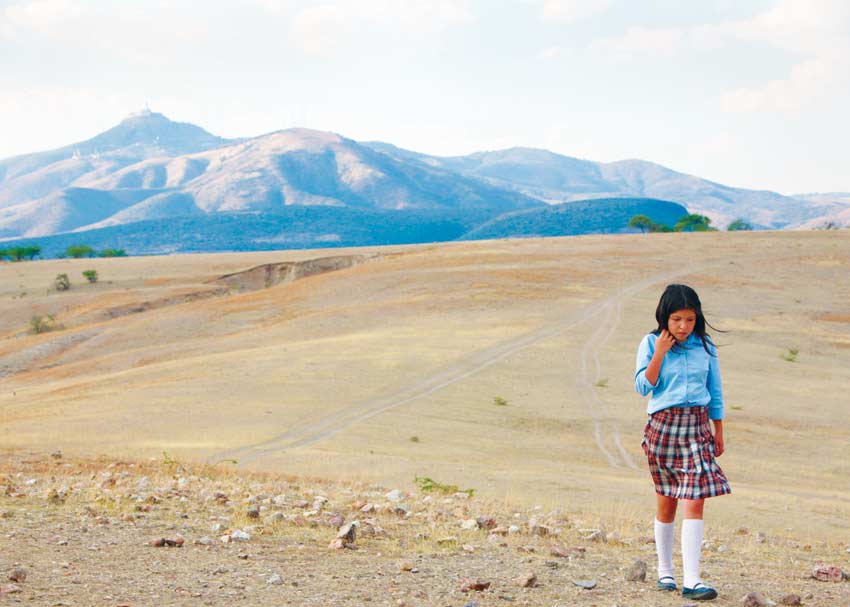
Most of us are aware of the violence and prominence of the drug cartels in Mexico. In Heli, the unfortunate reality of the situation is fictionalized in an oftentimes brutal 95 minutes of screentime. The titular Heli is a 17-year-old factory worker living within meager means with his wife, their baby, his 12-year-old sister, Estela, and their father. When Estela's 17-year-old boyfriend, an army cadet, proposes to Estela, he stashes a secret cache of cocaine at her house. Unfortunately, it triggers a pandora's box effect that exposes the corrupt nature of the Mexican officials being just as dangerous as the violent nature of the cartel members themselves.
Heli came with a warning of its excessive scenes of violence. While the few gruesome scenes weren't highlighted and stylized in the way Hollywood films do, they're no less shocking in how shocking they are. Rather, the violence is somewhat muted and nonchalant. By not making a spectacle of the violence, director Amat Escalante creates an even more devastating look at the reality that has held Mexico hostage as normal, everyday occurrences... which are unfortunately what they are.
Heli is a depressing film with no room for optimism. In saying that, it's also one of the best films I've seen this year. It might be a bit niche and catered towards film festival goers, foreign film aficionados, and those with interests in Mexico's politics, which is more than fine. If you don't fall under these aforementioned groups, I'd still suggest seeing Heli not only to get a better understanding of how violent Mexico is right now, but how different foreign filmmakers frame their films compared to the predictable drudge Hollywood has a tendency to crank out.
Score: 8.5 out of 10
[CIFF Capsule Review] Chasing Fireflies
[Ruby Hornet will be attending the 49th Chicago International Film Festival from 10/10 - 10/24. Be sure to follow along as we bring you coverage from the longest-running competitive international film festival in the country. You can find all of our coverage from this year's CIFF here.]
Chasing Fireflies
Director: Roberto Flores Prieto
Country: Colombia
CIFF Screenings: October 18, 2013 (5:30pm), October 19, 2013 (11:45am)
[youtube id="Z3PRRupllyw" mode="normal" align="center"]
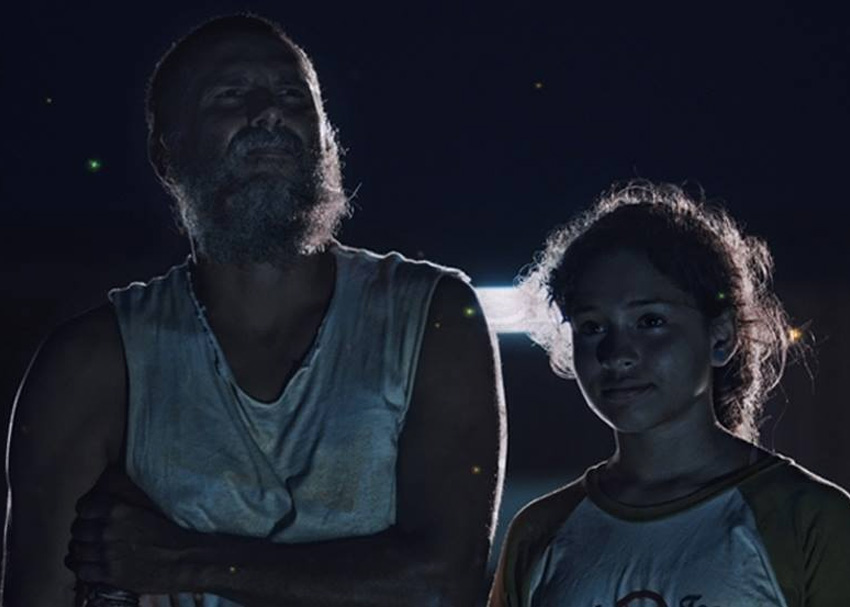
Manrique lives a solitary life watching over an abandoned salt mine in Colombia. His only forms of social contact are with a stray dog and a co-worker who insists on telling mediocre jokes before giving Manrique daily security codes. His routine is broken up by the appearance of a young daughter he didn't know about. Her cheery, optimistic nature soon begins to rub off on Manrique as he slowly begins to lighten up and connect with Valeria.
Chasing Fireflies was shot beautifully against the natural backdrop of Colombia. The most pivotal scene of film is perhaps where the film found its title where Manrique and Valeria are surrounded by fireflies during a late night bonfire; it's in this scene where the cinematography is at its best. The film's theme of family and love is never too sentimental or cheesy, which films of this nature can sometimes end up becoming. As has been common in most other films screening at this year's CIFF, Chasing Fireflies has many moments of quiet ambience, playing into Manrique's self-isolation, but also letting the relationship between he and Valeria grow naturally without the need for incessant dialogue to push the connection along.
Score: 7 out of 10