
[Sundance Review] Mississippi Grind
Road films always follow the same formula: two or more characters of completely contrasting personalities are put together on some magical adventure or journey towards something that promises to change their lives, but it’s within that journey itself and not the destination where they find that same something. But what happens if one of the primary characters in the adventure is wholly unlikeable and never actually learns from their mistakes? What then?
Mississippi Grind
Directors: Anna Boden and Ryan Fleck
Rating: N/A
Release Date: January 24, 2015 (Sundance)
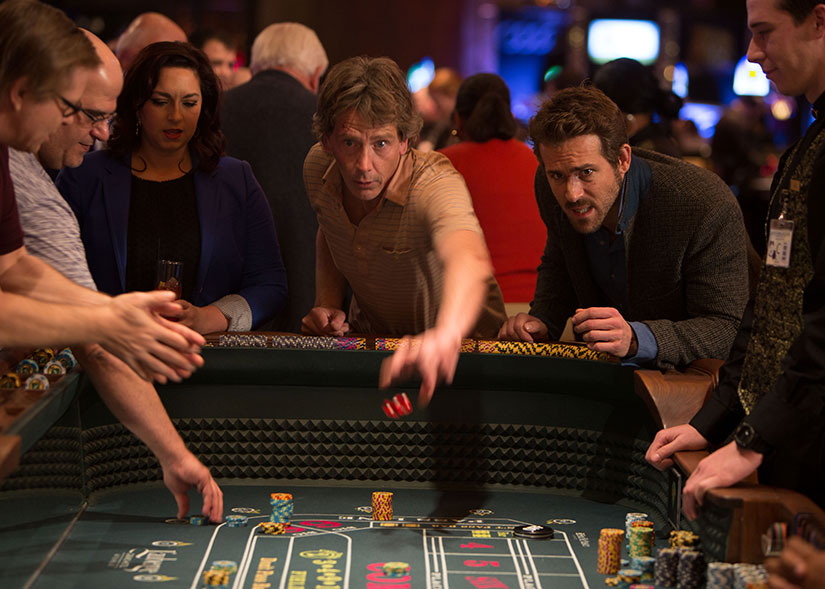
Gerry (Ben Mendelsohn) is a talented poker player, but like most gambling addicts, his habits have gotten the best of him. When the enigmatic Curtis (Reynolds) mysteriously shows up at a poker table Gerry's playing at, a rapport is somewhat struck between them. It's not until later that night at a local bar where Curtis and Gerry truly connect and spend the rest of the night galavanting across town wheeling and dealing, with Gerry realizing that Curtis is some type of good luck charm. Dangerously in debt to a mysterious woman, Gerry convinces Curtis to spot him some cash as they work various private poker tables, cruise ship games, and other various locales on their way to a supposed luxurious house game in New Orleans where the buy-in begins at $25,000. However, along the way, Gerry's true character and intentions are revealed, while Curtis discovers a side of himself through Gerry that makes him second guess the trip.
While Curtis is somewhat similar to the majority of Reynolds' past roles (charming, alluring, etc.), he obviously shines with these types of characters. There's also a bit of a magical element to Curtis that might be subtly alluded to, or could just be myself trying to inject an extra layer into a film that desperately needs more. Mendelsohn also portrays Gerry's greasy, untrustworthy character to a T. However, it's in the writing of his character and the overall narrative that irked me the most. To risk a potential spoiler, Gerry never learns anything by the end of the film. In a way, films that end with life lessons are predictable and ultimately don't serve a true purpose, while films like Mississippi Grind where characters don't have that moment of enlightenment are a lot more real and grounded. Yet, it doesn't work with this film, especially for one that pushes just how dangerous gambling addiction can be, especially for a character like Gerry who doesn't know when to quit. Curtis' character shows more growth and development, but it's a shame that his arc is relegated to a subplot to make room for Gerry's non-transformation.
Mississippi Grind will make some money at the box office thanks to Reynolds' involvement and A24 purchasing the distribution rights. However, it's a mediocre film that will garner some laughs, but will ultimately prove to be a gamble on opening weekend for most.
[Sundance Review] Ten Thousand Saints
I love period pieces that are a closer to contemporary time than those that are set centuries in the past, primarily because I find them easier to connect, the attitudes, culture, dress, etc. isn’t too different from modern times, and because they’re so close in time that fully imagining that world isn’t much of a stretch. The best element of period pieces, however, is the universal understanding that, no matter what decade the film takes place in, what world crises are taking place, we all share and face the same problems. Ten Thousand Saints is a succinct look at broken homes, the straight-edge movement, and how unexpected accidents could be the solutions to some of our problems.
Ten Thousand Saints
Directors: Shari Springer Berman and Robert Pulcini
Rating: N/A
Release Date: January 23, 2015 (Sundance)
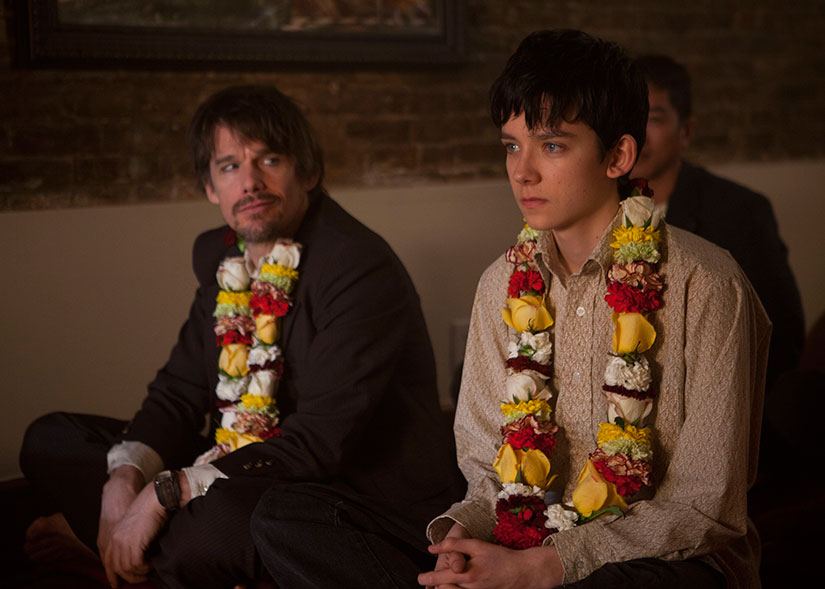
The film opens in 1980 Vermont where a young Jude witnesses his mother Harriet (Julianne Nicholson) kick his father Les (Ethan Hawke) out for impregnating her best friend. Upon asking whether Les will come back, Jude is hit with the shocking revelation that he’s adopted. Fast forward to New Year’s Eve 1987, and Jude (Asa Butterfield) is an aspiring punk alongside his best friend, Teddy (Avan Jogia). Despite not visiting for years, Les sends his girlfriend’s daughter, Eliza (Hailee Steinfeld) out to Vermont to spend time with Jude as a means of connecting. Upon meeting, the three have an instant connection through their similar interests in music and drugs. During a chance encounter at a party that night, Eliza and Teddy have sex while Jude is beat up by some jocks. As Jude and Teddy part ways with Eliza, they take one final trip off of air conditioning unit fluid and pass out. The next morning, Teddy is found dead.
Reeling from the loss, Jude is reunited with Les, now a drug dealer, who offers him the chance to move to New York with him and experience real big city life. There, he reconnects with Eliza and Teddy’s older brother, Johnny, who is a singer for a rising straight-edge hardcore band (straight-edge referring to the culture of no drugs, alcohol, or promiscuous sex). It’s soon discovered that Eliza is impregnated with Teddy’s child, and rather than stir the hornet’s nest more, the three come to the conclusion to say it’s Johnny’s baby while keeping it a secret from Les and Eliza’s mother, Diana (Emily Mortimer). However, when the truth is revealed, the three of them run off to find whatever it takes to make their family dynamic work, even if one of them is harboring a secret that threatens to throw the entire group’s functionality off.
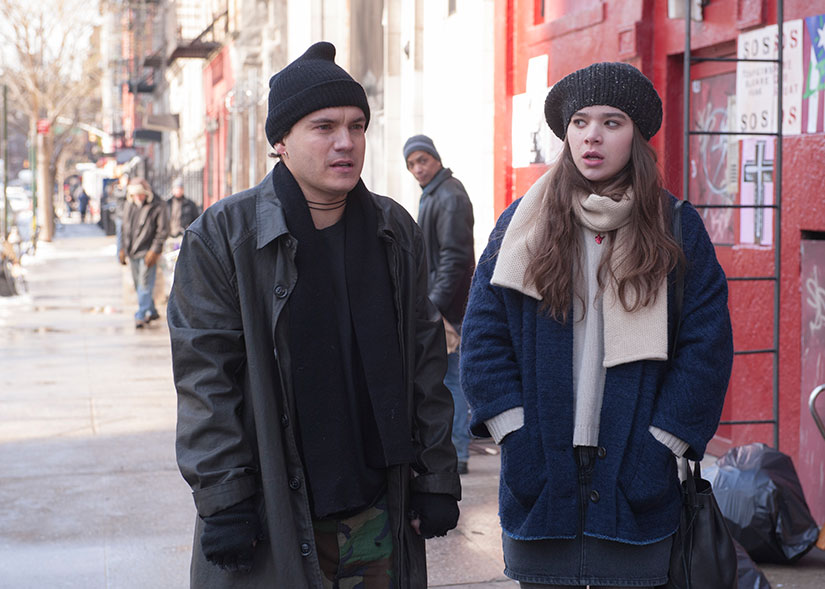
The major theme in Ten Thousand Saints is the dynamic between parent and child. Throughout the film, these bonds and connections are dysfunctional in many ways, as closely examined in the Jude and Les bond, but also seen between Eliza/Diana, Johnny and Teddy and their unseen mother, and even the crux of the film’s plot between Eliza and her unborn child. To frame these relationships amidst the rising hardcore/punk rock movement and the gentrification of Manhattan, specifically surrounding the 1988 riots in Tompkins Square Park, helps contextualize the never-ending cycle of change and growth in life with events that fall in line with the teenage memories of those who are middle-aged parents now, furthering the parental theme in the film.
Hawke shines in his supporting role as Les, channeling some similarities with his Boyhood character as a "part-time" parent who always shows up at the right moments to give wisdom or to help when absolutely needed. Both Butterfield and Steinfeld show growth in their performances, with Butterfield perhaps benefiting the most with a role that could help land him more mature roles in the future. Hirsch, not one to shy away from physically transforming himself for a role, appears a bit odd in the film, but certainly fits the mold of a straight-edge hardcore singer in late-'80s New York.
Ten Thousand Saints highlights small fragments of all of the different cultures it's full of (young parenthood, strained parent/child relationships, 1980s New York, straight-edge/hardcore, young love, coming-of-age, etc.), but does it in a way that it never feels too overwhelming. However, the film might not appeal to those that are uninterested in such things, especially the film's primary stage of New York.
[Sundance Review] Entertainment
Three years ago, Rick Alverson’s previous film, The Comedy, premiered at Sundance. The reception was wholly divisive, with many either loving or hating it. In the same vein as The Comedy, Alverson’s follow-up film, Entertainment, intends to poke and prod at audiences with the same subversive fervor.
Entertainment
Director: Rick Alverson
Rating: N/A
Release Date: January 24, 2015 (Sundance)
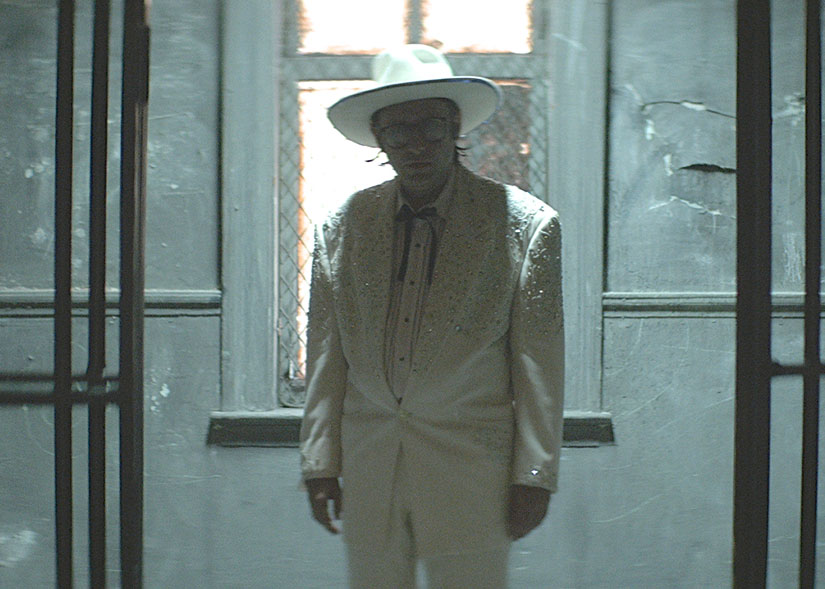
The unnamed protagonist of Entertainment (referred to as The Comedian, portrayed by Gregg Turkington) is a middle-aged comedian touring the Californian desert while playing at less-than-stellar venues to even lesser-than-stellar audiences. By day, he’s a schmuck wandering around unpronounced areas, but by night, he slightly comes alive once he hits the stage. However, his jokes are alienating, jarring, and unforgivable, and when audiences heckle him, he heckles back twice as hard, creating awkward and uncomfortable situations. Throughout his journey, he leaves nightly voicemails to an estranged daughter who doesn’t seem too interested in seeing or hearing from him. The film comes to a head when The Comedian attempts to perform at a glitzy children’s birthday party in Hollywood, only to have a mental breakdown.
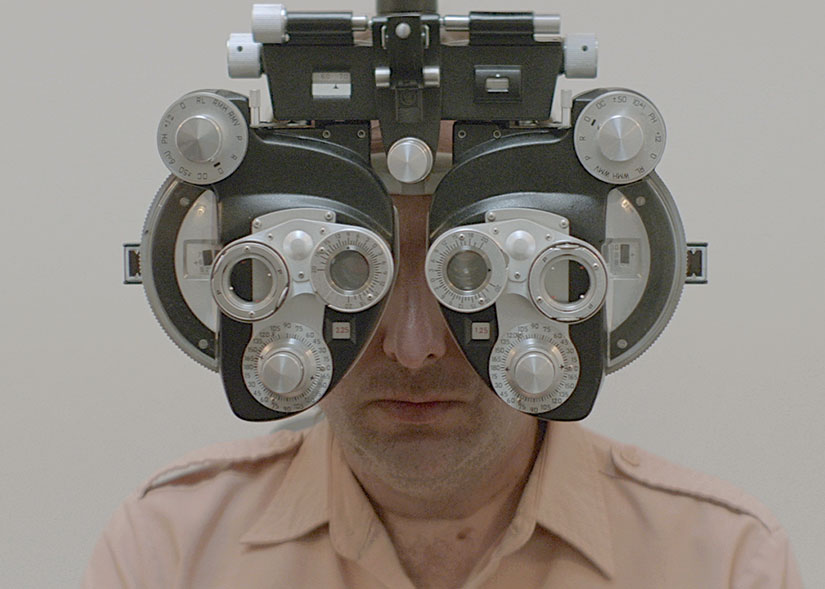
Fans of Turkington will instantly recognize The Comedian’s similarities to Turkington’s most famous character, Neil Hamburger. The jokes in the film resemble some Hamburger’s style of comedy that is intended to ruffle feathers and create unease within the audience. Indeed, it’s this uneasiness that’s carried over through the entire film. The Comedian is washed-up hasbeen (if he ever had been in the first place), and his desperation to justify his performances is truly uncomfortable to witness. Off-stage, his jarring discomfort is seen, such as an encounter with another man (Michael Cera) asking for help inside a rest stop bathroom.
The title Entertainment is used ironically, since the film doesn’t necessarily entertain audiences. Rather, the film challenges its viewers to truly examine what entertainment is and how much so-called entertainers have to go through to deliver their brand of “entertainment.” Juxtaposed with The Comedian’s self-deprecating performance is his tour buddy, Eddie the Opener (Tye Sheridan), who applies clown makeup and partakes in scat humor for laughs. Which of these approaches can be defined as “entertainment?”
From a film standpoint, Entertainment is admittedly boring and uninteresting where crowds will be split between those that “got” it and those that didn’t. However, from a deeper level of examining and critiquing art, Entertainment is the type of film that will have audiences picking it apart to find its true meaning. In saying that, it’ll fit well with fans of alternative/anti-comedy and art school crowds, but general audiences will avoid it.
[Sundance Review] Stockholm, Pennsylvania
Can a film be considering exceptional if the first two acts are brilliant, but trails off as the third act rears its ugly head? That’s the question I’d like to address with my review for Stockholm, Pennsylvania. As all forms of art are concerned, the full product is only as good as its weaknesses, and unfortunately, Stockholm, Pennsylvania showed so much promise, just to dovetail into a disappointing ending.
Stockholm, Pennsylvania
Director: Nikole Beckwith
Rating: N/A
Release Date: January 23, 2015 (Sundance)
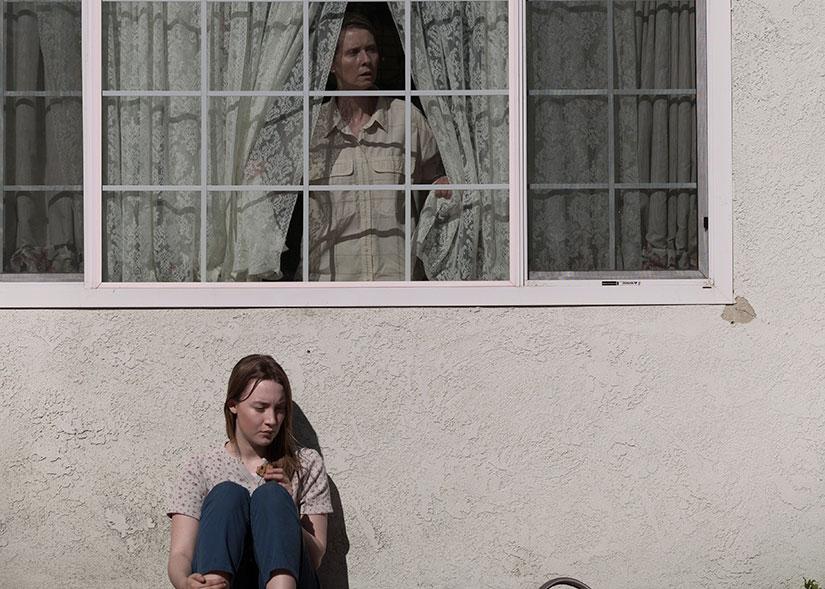
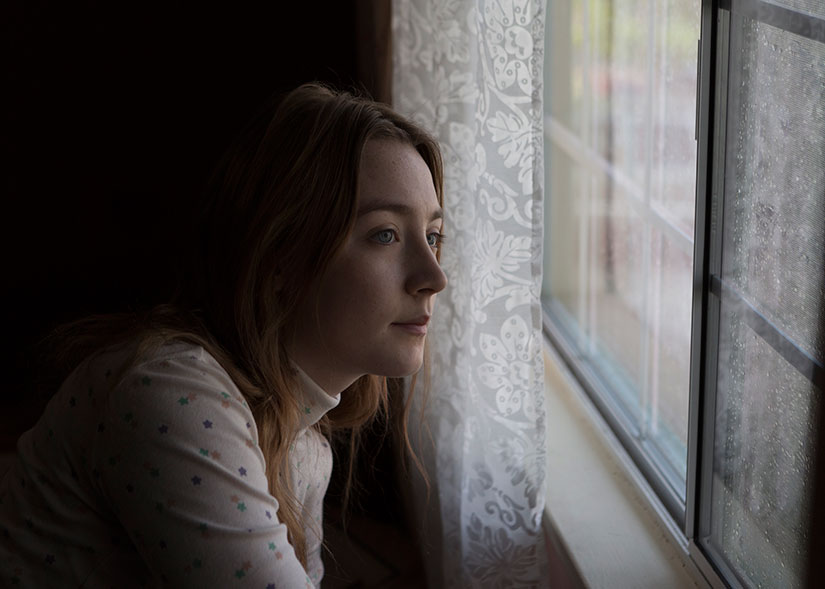
After 17 years of captivity, kidnapping victim Leia (Saoirse Ronan) returns home to parents she has no recollection of. While Glen (David Warshofsky) is passive (but confident) about Leia’s transition into her new life, Marcy (Cynthia Nixon) is desperate to recreate the attachment and bond between a mother and her child. Yet, despite all of Marcy’s attempts to reconnect, Leia’s transfixed with her captive, Ben (Jason Isaacs), while also struggling to make sense of reality and the lies Ben fed her for almost two decades. After no progress is made, Marcy’s desperation takes a dark turn as she suddenly becomes the monster she tried so hard to protect Leia from.
[youtube id="uzES5iXnO7E"]
The acting in Stockholm, Pennsylvania is brilliant. Ronan and Nixon delivered performances that should honestly be considered for major studio nominations. Leia is written as a complex character who is both headstrong and confident in herself, yet naïve to the real world. As the story progresses, Leia begins to break out of the hold that Ben held on her while she attempts to make sense of her new life. Ronan’s ability to balance the contrasting elements of Leia’s character should not go unnoticed, and will hopefully elevate her to the next level. On that same note, Nixon’s take on Marcy is so thrilling and provocative as audiences witness a Mother driven to dark lengths to ensure she can once again become the mother to her child that went 17 years without one.
The performances wouldn’t be as strong as they were without writer/director Nikole Beckwith’s vision. Stockholm, Pennsylvania is adapted from her stage play, and it truly shows thanks to the close-knit scenes between actors. Structured much like a short story, many of the narrative’s details go unsaid, leaving audiences to fill in holes. As someone with a Literature background, I loved how the details left unsaid shared the same importance with the details that are openly addressed.
However, as I inferred earlier, the film comes apart in the third act as Marcy spirals into an antagonistic role towards Leia. The character twist comes off too exaggerated and unrealistic and essentially changes the film’s tone from a psychological drama to a pseudo-suspense thriller that ultimately takes away from all of the goodwill built up prior to the conversion.
Despite a disappointing third act, Stockholm, Pennsylvania is still one of the better films I watched at Sundance. Beckwith’s take on examining the post script of a life following such a traumatic event like Leia experienced is intriguing, especially in the wake of the media blitzes that surround these situations; it’s a perspective that many don’t typically consider. With stellar performances by Ronan and Nixon, Stockholm, Pennsylvania is well worth the price of admission, even if the ending ultimately falls flat.

[Review] Ex Machina
Ever since Fritz Lang's Metropolis, female androids - or gynoids, to use the correct term - have been presented in cinematic science-fiction as a means of exploring man's conflicted relationship with female sexuality. Where Lang's 1927 opus dissected the impact of male fears on a religious and social level, Alex Garland's Ex Machina updates the story to a modern age where the fight for control over women's bodies has gone digital. The unsettling atmosphere which builds from the first meeting between Domhnall Gleeson's jittery tech nerd Caleb and the robotic Ava, constructed by Oscar Isaac's unstable Steve Jobs-alike Nathan, is as much down to the imbalance in control that the two men exert over Ava's existence as Garland's taut control of pace and tone.
Caleb is brought in by the reclusive Nathan to administer the Turing Test to Ava. However, since Caleb is aware of Ava being an AI from the start, Nathan posits that the real success will be if Caleb starts to regard her as a real person irrespective of that foreknowledge. Much of the drama unfolds through a series of conversations where Caleb increasingly feels as though it is he who is being tested, caught in the middle of a battle of wits between Nathan and his creation.
[youtube id="EoQuVnKhxaM"]
Ex Machina
Director: Alex Garland
Rating: R
Release Date: January 21, 2015 (UK)
As an effective three-hander - one other character features semi-regularly, but remains silent - the movie hinges on the performance of its leads to make the conversations as engaging as they need to be to sustain the drama. Of the three, it's Alicia Vikander's Ava who steals the show. It's hardly the first time we've seen this kind of performance in playing an AI - wide-eyed inquisitiveness, slightly inhuman movement, innocent demeanour - but Vikander ever so gently uses the body politics of the piece against its audience, using her character's awareness of her enforced passivity to inflect sadness and fear even while not playing them directly.
Ava's relationship with Caleb takes place entirely on either side of a glass screen and Vikander, with microscopic subtlety, evokes a sex worker talking to her client through a webcam, expressing desires and affections that can never quite be alluring enough to obscure the artifice of the performance. When she chooses to show Caleb what she would wear for him on a date, affecting a wig and a dress to conceal her transparent robotics, the scene carries a lingering sense of sadness that is reinforced with the sight later on of her undressing again, alone in the dark. Caleb later challenges Nathan over whether Ava was programmed to flirt with him, showing himself unable to distinguish between his outward anger at feeling manipulated and his inner frustration at being unable to indulge his fantasy that the object on the other side of the screen could be capable of sincere human intimacy. A late reveal about the parameters Nathan used in designing Ava only increases the underlying ugliness of the metaphor.

Oscar Isaac certainly gives Vikander a good run for her money. His Nathan is fearsome and mercurial, wracked by a genius-level intellect at once fuelling a self-image of a man on the verge of crossing the threshold into divinity, while stoking a barely suppressed paranoia about being destroyed by his creations, an internal psychological conflict he attempts to control through drink and violent exercise. Ava is his parallel: calm and controlled, intellectually curious but welcoming and engaging towards Caleb in lieu of Nathan's domineering idea of friendship. Domhnall Gleeson too is as captivating a screen presence as ever, hiding a calculating cunning behind Caleb's nebbish exterior.
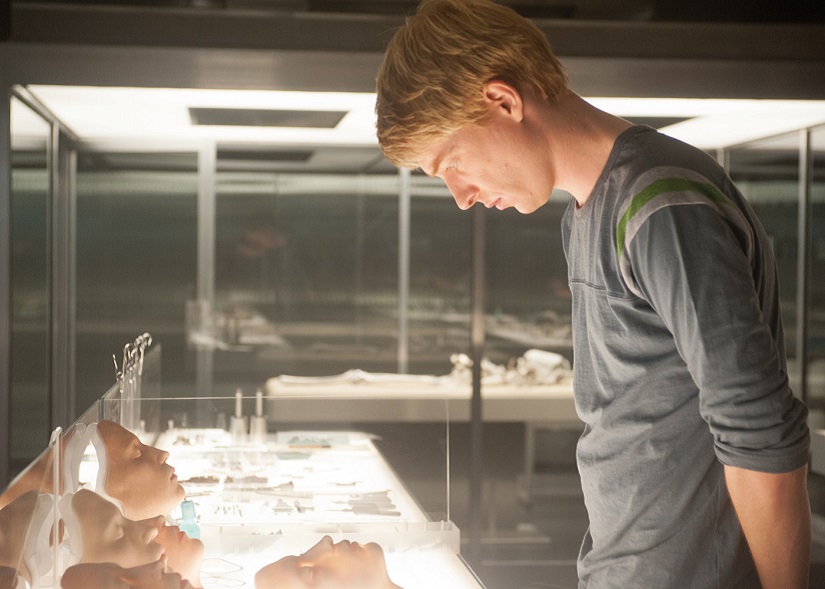
Beyond its characters, the movie takes place exclusively in a single location, Nathan's uber-modern hideaway in the stunning Norwegian wilderness. Garland slowly transforms the idyllic locale into an automated prison, contrasting the natural but sombre light of the house's upper levels, where the boys eat and play with nature all around them, if once again behind protective screens, with the windowless lower floors, where Nathan's research takes place under the sterile, unwavering glow of man-made light. The only misstep is the suffocating red lighting which accompanies the system-wide shutdowns occasionally forcing the house to reboot itself, a rather too obvious choice for a rather too obvious motif for the creator's inability to fully understand and control his creation. That said, Garland deploys the same lighting trick to enormously creepy effect during a dance scene set to Get Down Saturday Night, more effectively playing into Caleb's sense of being overwhelmed by his feelings of totally losing control of himself to Nathan's manipulations.
Despite Garland reaching the director's chair following a celebrated career as a novelist and screenwriter, his command of storytelling through visual language and the performances of his actors surprisingly proves more effective than his on-the-page plotting, which while commendably low-key and never losing sight of its subject matter, is a little predictable in its twists and occasionally blunt in its dialogue exchanges. There is never any doubt that Garland knows his audience is questioning everything shown and told to them, frequently doubling back on itself to maintain the same pervasive uncertainty which dogs Caleb throughout. Even with all the twists and turns, however, it's disappointing when more than once the obvious first guess turns out to be correct.
These are, however, minor quibbles in what proves something of a sister piece to Spike Jonze's Her. Where Jonze's movie played up the sadness of a time when many of humanity's most committed and honest relationships are to their machines and devices, Garland is more outwardly confrontational in condemning technology's role in reducing others, particularly women, to nothing more than an image on a screen to be observed, shared and manipulated at the user's whim. It makes a compelling case for the difference between attraction and objectification, with one a means of connection and the other a method of control. When Caleb asks Nathan why Ava was given sexuality at all, Nathan responds with what seems a considered response to humankind's compulsion to act and interact, before sneeringly pulling an about-turn by suggesting that what Caleb wants to know is whether or not he can fuck her, with the answer being yes. The worrying thing is that for all the philosophical grace of the first answer, one suspects that Nathan is correct in assuming the second is what Caleb really wanted to hear.

[Sundance Review] Cronies
There’s something special about Cronies that resonated strongly with me as I watched the film (and even carried over hours after the credits rolled). Whether it was the depiction of a Midwestern summer afternoon, the familiar characters in which I saw some of my own friends, or just my over-thinking nature of examining how friendships change throughout the years, I felt attached to Cronies, and there’s enough to like and dissect within the film that I believe anybody would enjoy it. Read on as I further explain why Cronies surprisingly became one of my top films from Sundance this year.

Cronies
Director: Michael J. Larnell
Rating: N/A
Release Date: January 25, 2015 (Sundance)
Louis (George Sample III) is a 20-something trying to get his life on track to provide for his girlfriend and their daughter. However, he appears to be held back from growing up thanks to his childhood friend, Jack (Zurich Buckner), dragging him around in the same monotony that Louis is desperate to escape. Adversely, Louis’ new friend and co-worker, Andrew (Brian Kowalski), represents a fresh direction for Louis that could help with his growth. However, as Jack and Andrew meet for the first time, bravado initially takes over as they both size each other up. As the day progresses, the three of them form a sense of camaraderie, even as the dangers of their day spent together grow more and more threatening.
Cronies is framed like a documentary where various interview segments with the three men take place throughout the film. It’s in these segments that we begin to see each characters’ true feelings about one another and their various situations. Admittedly, the interviews can be seen as a cheap way to flesh out each character’s arc and development, but they’re a stylistic decision made by writer/director Michael J. Larnell, and one that I definitely enjoyed. Also abetting Larnell’s vision is the film being shot almost entirely in black and white, save for a few flashback scenes that appear in color. It’s a nice aesthetic, especially when Larnell flips what we’ve come to expect in regards to how color is used to represent time and memory.
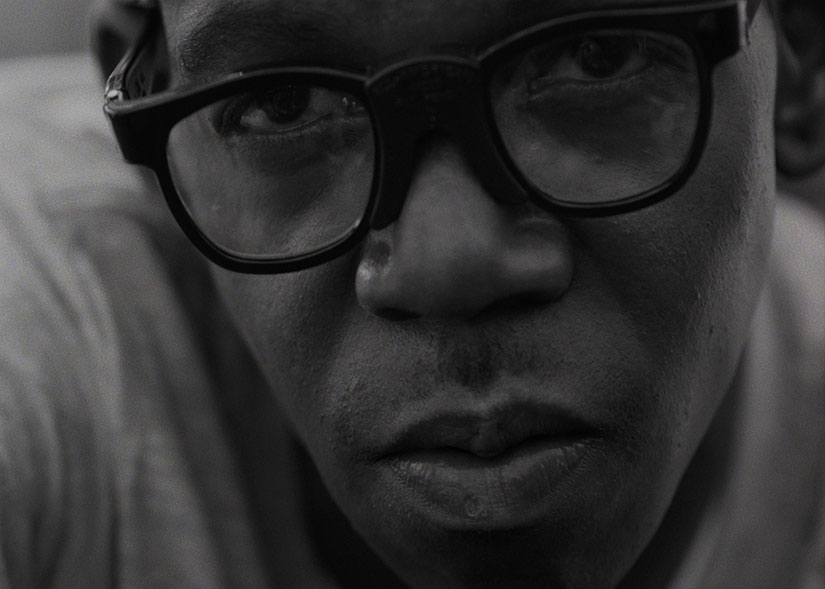
Most importantly, Cronies examines friendships in a way that feels natural without becoming too heady or preachy. We’ve all found ourselves playing the role of Louis, Jack, and Andrew at some point in our lives, and we’ve all had friends very much like them, as well. It’s this universal understanding of friendship that makes Cronies so enjoyable. There's no doubt that Larnell won't suffer any sense of a sophomore slump with his next film, especially considering how strong this debut is.
[Sundance Review] Z for Zachariah
Post-apocalyptic media is growing a bit long in the tooth. Granted, I’ll still show excitement over any film that hones in on the sci-fi element of a world devastated by some unknown disaster, but changes and alterations to the formula are much needed. When I read Z for Zachariah featured a love triangle set in the South following some untold incident, I was hooked. The minimal cast featuring 2013’s break-out actress Margot Robbie, Chris Pine, and Chiwetel Ejiofor didn’t help with my excitement.
[youtube id="a_Kay2ldHEY"]
Z for Zachariah
Director: Craig Zobel
Rating: N/A
Release Date: January 24, 2015 (Sundance)
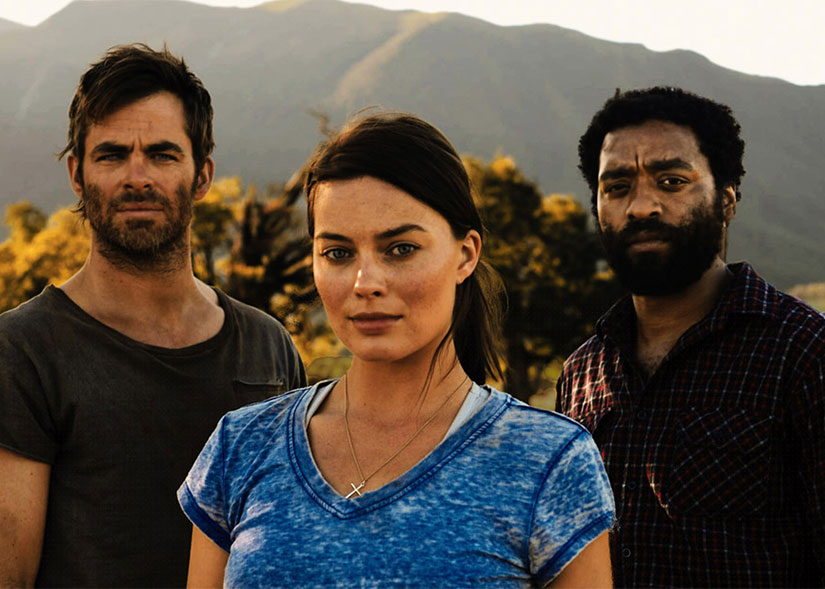
Robbie stars as Ann, a Southern Christian woman who is left alone to fend for herself after her family left to find survivors, but never came back. During one of her scavenges, she comes across John (Ejiofor) bathing in a waterfall poisoned with radiation. Ann is able to rescue John and nurse him back to health, and the two understandably are drawn to one another. Just as the sexual tension is about to come to a head, they are approached by a mysterious man, Caleb (Pine), who threatens the serenity between John and Ann. Whereas John is an atheist, both Caleb and Ann share the same religious beliefs, and emotions are thrown out of sync as both men attempt to balance their respective attraction to Ann with their duties for survival.
With the film kept to three primary actors, each are given ample opportunities to shine. However, and not as a knock against Ejiofor and Pine, but Robbie shines in her performance, building upon her stunning performance in the aforementioned The Wolf of Wall Street. Robbie was able to deftly balance a complex array of emotions that define her Ann with equal parts innocence, strength, and desire for finding love. Ejiofor’s John also balances a sense of security and protection towards Ann while slowly revealing a dark and violent side, while Pine’s Caleb is surrounded by mystery that leaves audiences with a feeling of skepticism over his true intentions.
Z for Zachariah’s strengths are in its cast’s performances, yet it leaves you wanting more. My gut reaction following my screening of the film, outside of tremendous praise for Robbie’s performance, was that it would find acclaim through festival circuits, but wouldn’t attract much mainstream attention outside of Robbie’s involvement. However, as I’ve written this review, I found myself enjoying the film more than I initially did. In saying that, Z for Zachariah may be one of those films that will grow on you as more time passes. If you’re expecting instant gratification, you’ll ultimately be let down.

[Sundance Review] The Summer of Sangaile
One thing I’ve noticed at Sundance this year is the amount of coming of age films that are featured on the program. One such film is The Summer of Sangaile, a Lithuanian film that features two culturally different teenage girls developing a romantic, electric connection with one another. If this sounds somewhat similar to 2013’s Blue is the Warmest Color, that’s because there is indeed a lot of similarities between the films; however, whereas Blue is the Warmest Color was comical in its depiction of love (perhaps due in part to its source material being a graphic novel), The Summer of Sangaile is grounded and offers a sweeter approach to first love.
The Summer of Sangaile
Director: Alante Kavaite
Rating: N/A
Release Date: January 22, 2015 (Sundance)
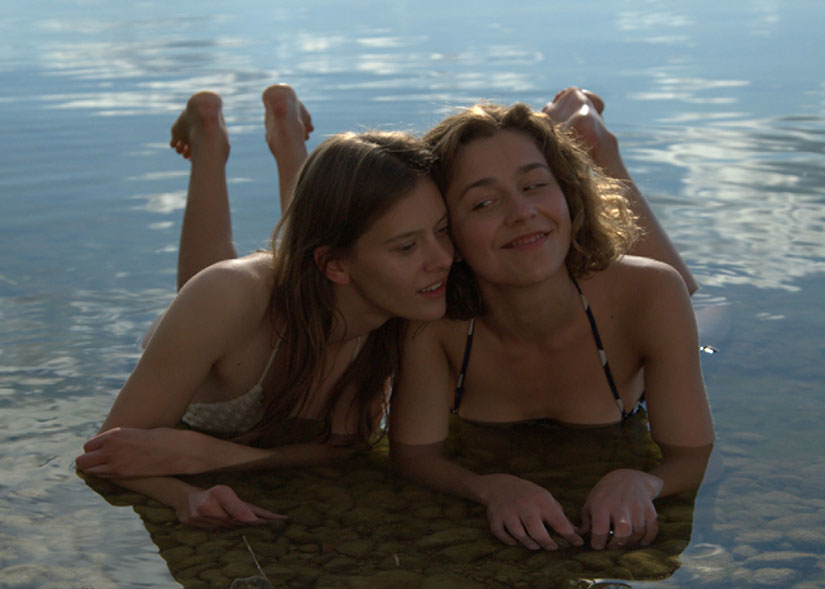
Sangaile (Julija Steponaityte) is a somewhat awkward teenage girl vacationing in Lithuania for the summer transfixed by stunt planes despite her fear of heights. Noticing her fascination with the planes, Auste (Aiste Dirziute) rigs a contest to allow Sangaile to ride in one, but she refuses. Auste’s determination to befriend Sangaile goes undeterred, and the two quickly connect with one another, resulting in an undeniable romantic and sexual chemistry that allows both girls to open up to one another. However, as they grow closer, Sangaile’s level of comfort begins to be pushed as Auste attempts to fully break her out of her shell.
The strength of the film comes in the performances by the two women. While the characters themselves (and ultimately, the narrative as a whole) are a bit cliché, both Steponaityte and Dirziute are able to carry their characters past any aforementioned clichés. Dirziute especially shines in her debut film with a sense of subtle longing in her mannerisms, like a gaze directed at Sangaile that lasts just long enough.
The Summer of Sangaile, like most foreign festival films, may not get wide distribution, but should still be searched for by those that appreciate strong cinematography and coming-of-age films. Unfortunately, the tired character archetypes and predictable narrative ultimately hold The Summer of Sangaile back.